Thursday, October 15, 2009

turns away thy thoughts from that which is really important

Meditation for July 10th:

II. Consider secondly, that even though no harm were to come to thee by the acquisition of those posts which thou spendest thy life in striving after, there would still be harm in seeking after them. And the reason is, that this seeking after them turns away thy thoughts from that which is really important, that is, the business of thy eternal salvation; and how many doubts are there about that business ! Thou art ignorant what things most tend to ensure it, " what is profitable" for thee; and consequently, thy one only study should be concerning a matter so important. This is the point on which all thy anxiety, all thy thoughts, all thy words, all thy desires ought to be centred, while, on the contrary, by seeking after things in the world which are difficult of attainment, such as lofty position, thou necessarily must neglect what is important for what is unimportant. Is it not better to devote to the good of thy soul the pains and anxiety which thou didst so eagerly devote to things of this world? "What needeth a man to seek those things that are above him, whereas he knoweth not what is profitable for him in his life, in all the days of his pilgrimage ? " A traveller does not waste his time on the road in useless employments; he concerns himself only with his object, which is to get safe to his country. This is what he thinks of, speaks of, inquires after; he does not trouble himself at all about other things. On the journey he is contented with an ordinary lodging, ordinary clothing, ordinary food, with attendance even less than ordinary; and why? because there is no time to lose, he is a traveller. And thou, too, art a traveller on earth, thou knowest this, and thy country is Heaven. Spend thy time then in learning what it is important to learn, what is the surest way of reaching it. As to the rest: " What needeth a man to seek those things that are above him, whereas he knoweth not what is profitable for him in his life ?" If he did know " what is profitable," that is, what is profitable for the attainment of everlasting salvation, then, indeed, there would be less harm in employing his time in other things; but as he does not know it, he should take pains to learn it. This only is important: " But one thing is necessary."1

And this is why the Wise Man does not say, " What advantage is it for a man to seek those things that are above him," but "what needeth a man to seek" them? Because he takes for granted that a man has no business on earth but that which is necessary, namely, to work out his everlasting salvation.

III. Consider thirdly, that besides all this, there is the additional consideration that the time is short, for it is not a question of ages, but merely of days, which make up the sum of thy life. How, then, canst thou waste it in seeking after anything but that which ought to be sought for ? In a besieged city men buy water, because it is scarce, at a high price: so too is it with corn in a time of famine, hay in a time of drought, iron in time of scarcity; and all goods, in the same way, however common, rise to a high price if they are scarce. How is it, then, that time alone does not rise in value with thee, when it is, in itself, so precious?
...

Monday, October 12, 2009

rob thee of thy time by inviting thee to idle amusements

Meditation for Sept. 12th (pg. 291 - 294) on redeeming time:

IV. Consider fourthly, who these assassins are, from whom thou hast to redeem thy time for the future, so as not to lose it. They are the same who have so often robbed thee of it in the past—the men amongst whom thou art living. These may be divided generally into two classes, friends and enemies. The former very often try to rob thee of thy time by inviting thee to idle amusements; do thou redeem it, even at some cost, even by letting them think thee uncourteous. The latter try to rob thee of it by persecuting thee; they excite disputes about thee, they distrust and importune thee, almost endeavouring to compel thee to lose much time in defending thyself. Do thou redeem it from them also, even though it should be with some considerable loss of reputation or property. " Lose something," so was St. Augustine often wont to say, " so as to redeem time which thou mayest spend for God."1 This is what is meant by "redeeming the time." And how wise is the man who acts in this way ! Yet there are few who understand this; most men consider every other temporal good more valuable than time, whereas time is really more valuable than every other temporal good, because the eternal good may be purchased at last by a man of sound mind without anything else ; but without time it is impossible.

Rules for living well by St. Leonardo of Port Maurice

From The hidden treasure: or, The value and excellence of holy mass.

RULES FOR LIVING WELL


He who desires to be saved, lives according to rule, and establishes an arrangement of his time with a view to devotional exercises. Dearest reader, if you wish to maintain yourself in the grace of God, never abandon these brief exercises which I now propose to you.

Choose for yourself a good confessor, to whom you may confide the treasure of your soul. Go often to him, to give an account of your conscience, and do not change him by mere caprice or fickleness.

Every morning offer to the Lord all the good works of that day, all its labors and sufferings, and all your actions, in union with the merits of Jesus Christ.

Offer all your actions to the Most Holy Trinity, to Mary, ever Virgin, and to all the blessed of Heaven, in suffrage for the Souls in Purgatory.

Form the intention to gain the Indulgences obtainable by prayer or act during the whole day.

Avoid sloth, bad company, dangerous conversations, and games; remembering that time passes and never returns, that you have a soul, and that if you lose your soul, you lose all.

Every Morning

When as yet scarcely awake, give your very first thought to God; while dressing keep reciting vocal prayers, and recommend yourself to God - then say upon your knees: "Most Holy Trinity, I believe that Thou art present with me; and I adore Thee. I thank Thee for having preserved me during the past night; I offer to Thee all my actions. My God, my love, Goodness Infinite, and worthy of all love, assist me this day; keep me free from sins and dangers; hold Thy hands above me, and preserve me from betraying Thee.

Then say three Glorias to the Most Holy Trinity, one Pater to Jesus, three Aves to Mary, and beseech her to guard you under her mantle; offer all your senses and faculties to Jesus and Mary.

Act of Faith

O my God, Infallible Truth, I believe all that Holy Church teaches, because Thou hast revealed it. I believe in the Most Holy Trinity, Father, Son, and Holy Spirit, three Persons, and one God, Who punishes the wicked, and rewards the good. I believe that the eternal Son of God made Himself man, and died to save my soul; that He rose again from the dead, exists in Heaven, and in the Most Blessed Sacrament; bears the name Jesus Christ; is the Judge of the living and the dead; and that it is He Who instituted the holy Sacraments as means of pardon and sanctification. I thank Thee that Thou hast made me a Catholic. Grant me the grace that I may live and die entirely Thine, and ever exclaiming, O blessed faith of Jesus Christ!

Act of Hope

My God, my hope, my ever faithful God, mighty and compassionate, trusting in Thy promises, I hope to obtain from Thee, through the Blood of Jesus Christ, the pardon of my sins, the virtues of sanctity, and the glories of Paradise.

Act of Charity

My God, my love, Father, and Spouse of my soul, Supreme and Infinite Good, I love Thee with my whole heart, because Thou art worthy of all love. I love Thee more than my life, and for love of Thee I love my neighbor as myself. O God, would that I could love Thee as the seraphs love Thee. Would that I were able at the cost of my blood, to make all the world to know and to love Thee.

Act of Contrition

O God, my beloved, Thou hast created me to love and to serve Thee, and I, ungrateful, have done nothing but offended Thee. I am confounded; I repent. Infinite Goodness, would that I had never offended Thee! Would that I might die of sorrow! Pardon me, my Jesus, by the Blood which Thou hast shed for me! I promise to love Thee forever, and never to repulse Thee by sin again.

Then make a half-hour's mental prayer, or at least during quarter of an hour, upon the Passion of Jesus, and upon the last things, death and judgment.

Never omit to hear holy Mass every morning. It is an infinite treasure, and will be infinitely profitable to you.
Afterward you will go to your affairs, often recalling your thoughts to God, Who is ever present beside you.
At table give a thought to God, and act upon the resolution of eating in order to live and serve your God. Practise some little mortification at each meal. Then thank the Lord.

In the Course of each Day

Give a short time to prayer; visit the Most Holy Sacrament and our Blessed Lady. Read some devout book, and do some good to your neighbor. Recite five Paters, Aves, and Glorias to the wounds of Jesus, and beseech Him to pardon your sins, remove your corruptions, and bestow upon you virtues; that He may grant you perseverance, and fit you for Paradise. Repeat also three Paters, Aves, and Glorias to the Most Holy Trinity, with three acts of love, in gratitude for the graces granted to Mary, to the Saints, and to yourself. Recite devoutly the third part of the most holy Rosary, with Litanies. When you meet acquaintances, use for salutation, All praise to Jesus Christ and Mary! and in reply, Forever! You will thus gain many Indulgences.

In the midst of your work or business, lift up your mind from time to time to that God Who is ever present with you. Collect your thoughts, and with some short prayers recommend yourself often to Him.

Every Evening

If you are head of a family, collect your household. Join with them in prayers for a short time, and then say the most holy Rosary with them. Before going to bed, examine your conscience thus:
1. Place yourself in the presence of God, and thank Him for all the benefits received from Him, more especially those of the bygone day.
2. Entreat for light to know your sins, and for graces whereby to amend.
3. Examine yourself as to the sins of the day.
4. Ask pardon of God with all your heart, and promise never more to offend Him, and to fly from all the occasions which have proved themselves most dangerous to you.
5. Pray to the Lord to protect you during the coming night, and offer every breath you draw as an aspiration to Jesus.
6. Repeat three Aves to Mary, and a Pater in honor of your Angel Guardian. Repeat the acts of Faith, Hope, Charity, and Contrition, already given.

Sleep with some holy picture or image near you.

Let no worldly thought enter or remain in your mind. If you wake, pray to Jesus, and invoke Mary.

Every Week

Receive with all devotion the Most Holy Sacrament. Give a sincere account of your conscience to your spiritual Father. Frequent some devout congregation or confraternity of Mary. Fast or practise some abstinence beyond the law of the Church on Friday or Saturday.

Every Month

Choose some of the Saints, or some choir of Angels, for special advocates during it. Select some special virtue in which particularly to exercise yourself. Go into retirement during one day, in order particularly to revise and probe your conscience. Undertake to discover your dominant passion, and lay down for yourself particular methods for overcoming it. Prepare during that day for dying well; arrange for the departure of your soul; make a most exact confession, and all those solemn protests of entire submission, devoted resignation, of generous confidence, of ardent desire, of prostrate penitence, of faith, of hope, of charity, and all the supernatural acts of the soul, which befit the dying Catholic.

Every Year

Go through the spiritual exercises during eight days, attending only to God and your soul. Make a general confession, and determine on the details of a more effective pursuit of a holy course of life during the remainder of your days on earth.

The Rule of St. Gabriel of Sorrowful Mother

  1. I will keep my rule, even the smallest.
  2. I will not neglect any of my spiritual exercises.
  3. Shun idleness.
  4. I will be punctual.
  5. I will obey the sound of the bell as though it were the voice of God.
  6. I will receive all things from the hand of God, as being sent by Him for my own personal benefit.
  7. I will profit by every occasion for mortification that may occur.
  8. I will fulfill exactly my ordinary duties, mortifying self in whatever would prove an obstacle to perfect obedience.
  9. I will mortify my eyes and my tongue.
  10. I will not leave my cell without necessity.
  11. I will not inquire after anything through curiosity.
  12. I will check my desire to talk.
  13. I will increase the number of such like acts daily.
  14. I will not take any food outside of mealtime.
  15. I am poor and I should act accordingly.
  16. I should be willing to put up with any inconvenience gladly.
  17. I will not eat with avidity, but rather with reserve and with modesty, subjecting my appetite to reason.
  18. I will mortify myself in ordinary things and whatever I feel inclined to do, saying in my heart: "O my God, I will not do this thing through mere inclination, but because it is thy will".
  19. I will be reserved toward those to whom I feel most inclined, prudently avoiding their presence and conversation.
  20. I will not utter a word that might, in the least, turn to my praise.
  21. I will not take pleasure in any praise bestowed upon me.
  22. I will never excuse myself when I am blamed or corrected, nor even resent it interiorly, much less put the blame upon others.
  23. I will never speak of the faults of others, even though they may be public, nor will I ever show want of esteem for others, whether in their presence or in their absence.
  24. I will not judge ill of anyone.
  25. I will show the good opinion I have of each one by covering up his faults.
  26. I will consider everyone my superior, treating all with humility and reverence.
  27. I will rejoice at the good done by others.
  28. I will not permit myself to become interested in vain and useless things.
  29. I will rejoice at the success of others.
  30. I will practice charity and kindness, assisting, serving and pleasing all.
  31. I will shun particular friendships, so as to offend no one.
  32. Every morning and evening I will practice some act of humility, and gradually increase the number.
  33. I will close my heart against disquiet of any kind.
  34. I will suppress immediately all emotions of impetuosity and all affections that might cloud my mind, even lightly.
  35. I will obey the voice of the Superior as if it were the voice of God himself.
  36. In my obedience I will neither examine the why nor the wherefore.
  37. I will conform my judgment to that of my Superior.
  38. I will not employ time in conversing about purely worldly matters.
  39. "Faithfulness in little things" is the motto I will always follow in my efforts to reach holiness.
  40. I will try to reproduce in myself whatever I see edifying and virtuous in the conduct of others.
  41. I will give to God the best that I have -- the entire affection of my heart.

Saturday, October 10, 2009

think you can associate with the female sex without sin

Life of St. Columban

8. For as he was still meditating upon his purpose, he came to the dwelling of a holy and devout woman. He at first addressed her humbly, afterwards he began to exhort her, as far as lay in his power. As she saw the increasing strength of the youth she said : "I have gone forth to the strife as far as it lay in my power. Lo, twelve years have, passed by, since I have been far from my home and have sought out this place of pilgrimage. With the aid of Christ, never since then have I engaged in secular matters; after putting my hand to the plough, I have not turned backward. And if the weakness of my sex had not prevented me, I would have crossed the sea and chosen a better place among strangers as my home. But you, glowing with the fire of youth, stay quietly on your native soil ; out of weakness you lend your ear even against your own will, to the voice of the flesh, and think you can associate with the female sex without sin. But do you recall the wiles of Eve, Adam's fall, how Samson was deceived by Delilah, how David was led to injustice by the beauty of Bathsheba, how the wise Solomon was ensnared by the love of a woman ? Away, O youth ! away ! flee from corruption into which, as you know, many have fallen. Forsake the path which leads to the gates of hell." The youth, trembling at these words, which were such as to terrify a youth, thanked her for her reproaches, took leave of his companions and set out. His mother in anguish begged him not to leave her. But he said : " Hast thou not heard, ' He that loveth father or mother more than me is not worthy of me?' " He begged his mother, who placed herself in his way and held the door, to let him go. Weeping and stretched upon the floor, she said she would not permit it. Then he stepped across the threshold and asked his mother not to give way to her grief ; she would never see him again in this life, but wherever the way of salvation led him, there he would go.

Monday, September 14, 2009

read spiritual books only

I will take the example of another Doctor of
the Church, the great St. Jerome. He tells us of himself that,
when he had forsaken the pomp and pride of Rome, he withdrew
to lead a hermit's life in the holy places of Palestine. Here he
spent his days and nights in watching and prayer, in weeping,
fasting, and doing severe penance. Yet, amid the holy rigours of
a life so fervent and penitential, he had clung to one defect which
greatly impeded his spiritual advancement, and this was an over-weening
passion for profane literature, and a kind of aversion for
the reading of the sacred writings, on account of what seemed to
him their unpolished style ; for he attributed to the sun as he
confesses with great self-reproach what was in very truth nothing
but the fault of his own eyes. Almighty God, meanwhile, fore-seeing
that without the aid of holy books the Saint would never
reach that height of sanctity for which he was destined, administered
a remedy, very harsh, no doubt, but well adapted to make
him aware of his fault. He sent a grievous sickness which soon
brought the solitary to the brink of the grave. As he was lying
at the verge of death, God called him in spirit before His tribunal.
The Saint being present, heard the Judge ask him who he was.
He answered, unhesitatingly, "I am a Christian ; I hold no
other faith than Thine, my Lord, my Judge." " Thou liest," said
the Judge ; " thou art a Ciceronian ; for where thy treasure is
there thy heart is also." He then ordered him to be severely
scourged. The servant of God shrieked with pain as he felt the
blows, and begged for mercy, repeating with a loud voice : Have
mercy upon me, O Lord, have mercy upon me. Meanwhile, they
who stood round the throne of that angry Judge, falling on their
faces before Him, began to plead on behalf of the culprit, implored
compassion for his youth, and promised in his name that his fault
should be corrected. Then St. Jerome, smarting as he was with
the pain of the hard strokes that he had received, and who would
gladly have pledged much greater things, began to promise and
to swear with all the ardour of his soul, that never again would
he open profane and worldly books, but that he would read
spiritual books only. As he uttered these words he returned to
his senses, to the amazement of the bystanders, who had believed
him to be already deceased. The holy Doctor concludes the
narration of this sad history with these words : Let no one fancy
that it was an idle dream, like to those which come to cheat our
minds in the dead of night. I call to witness that dread tribunal
before which I lay prostrate, that it was no dream, but a true
representation of a real occurrence ; for when I returned to
myself I found my eyes swimming with tears, and my shoulders
livid and bruised with those cruel blows. He tells us, finally,
that after this warning he devoted himself to the reading of spiritual
books with the same diligence and zeal which he had before
bestowed upon the works of profane writers. It was thus that
Almighty God induced him to apply to that study of divine things,
which was so essential to his own perfection, and destined to do so
much good to the whole Christian world.

Scaramelli http://www.archive.org/stream/directoriumascet01scaruoft/directoriumascet01scaruoft_djvu.txt

Sunday, August 23, 2009

Sunday, August 2, 2009

weak souls that find everywhere in the world proximate occasions for offending God mortally

States of Christian Life and Vocation, According to the Doctors and Theologians of the Church by Jean-Baptiste Berthier


CHAPTER V. IS THE RELIGIOUS STATE OBLIGATORY.


There are also weak souls that find everywhere in the world proximate occasions for offending God mortally, and for whom religion would be a secure haven against tempests, an escape after spiritual shipwreck. In reference to this matter, we read as follows in St. Liguori : " If one thought that, by remaining in the world, he would lose his soul, either because he has experience of his weakness amid the dangers of the world, or because he does not find there the assistance that the religious state offers, he could not be excused from grievous sin were he to remain in the world, since he thereby would put himself in serious danger of losing his soul."


CHAPTER VI. IS THE RELIGIOUS STATE A COUNSEL.


Although a reasonable cause suffices for putting off the execution of such a vow, yet care is to be taken lest delays should bring on entire faithlessness, and we should fear the sins that may be committed in the world. A long delay, having no excuse in its favor, would be grievously sinful. He who vowed to enter religion, but has not succeeded in gaining admission, though he took all the necessary steps to secure it, is freed from the obligation of his vow, provided he has no hope of gaining admission at some future day.[12]


CHAPTER VII. IS IT ALLOWABLE TO EXHORT PERSONS TO ENTER RELIGION.


"If we knew a place unhealthy and subject to pestilence, would we not withdraw our children from it, without being stopped by the riches that might be heaped up in it, or by the fact that their health had not as yet suffered, and might, perhaps, be secure in it from all danger? And yet, now that so deadly a contagion has overspread everything, not only are we the first to push these same children into the chasm, but we even drive away as impostors those who would fain keep them back from destruction."[4]


What are you doing under the paternal roof? ...even if your father were to throw himself across the threshold of your house, step over the obstacle, and with unquivering eye rush to take your place under the standard of the cross. Our heart is not of iron, nor are our feelings dead ; your grandmother, your tutor, who, next to your father, has a claim on your filial affection, exclaim, 'Wait a while until we are dead ; bury us before you go'--love for God and fear of hell easily break all chains. O solitude, all spangled with the flowers of Jesus Christ! O solitude, wherein are shaped the stones that build up the city of the great King! Blessed retreat where one enjoys familiarity with God ! Brother dear, what are you doing in the world, which is so far less than you? How long more shall the paternal roof shelter your head ? Will you tarry much longer in the smoky prison of cities ? Do you fear hardship? And what athlete was ever crowned without a struggle ? It is my love for you, O brother ! that has urged me to say these things, to the end that, on judgment-day, you may share the glory of those who now live amid the holy rigors of penance."[5]


But there is nothing more striking than the example of St. Bernard. The details are taken from the best historians of his admirable life.[7] This saint in the flower of his youth, at


the age of twenty, began to feel the impulse of grace drawing to retirement from the busy


world. He not only triumphed over the opposition of his family, but drew to his purpose


his uncle and his brothers, and took with him to Citeaux thirty of the noblest gentlemen


of his country.


St. Liguori: In the world it would be difficult for you to keep yourself in the grace of God. What I say to you, I repeat to all young women who come to ask my advice. I always remind them that, such is the corruption of the world, they will meet in it a thousand hindrances to their salvation. You should then fear to abandon Christ for the world.

Sunday, July 26, 2009

refuse himself what is allowable, because he often indulged in what was forbidden.

States of Christian Life and Vocation, According to the Doctors and Theologians of the Church by Jean-Baptiste Berthier


St. Paul, who among the apostles was the last to be converted to Jesus Christ, embraced evangelical perfection immediately after his marvellous conversion. Many new converts to the faith of the Church enter the religious state soon after their reception into the fold of Christ. Who would be so bad an adviser as to recommend them to remain in the world rather than seek in a monastery a shelter for their baptismal grace? Who but a silly man would attempt to make them alter their holy resolves ? This suffices, then, to show how ridiculous it is to pretend that we should keep away from the religious life all those who have not for a long time observed the commandments of God. "[3]

As to repentant sinners, it is plain that, even after the most grievous sins, they may enter the path of the counsels. Furthermore, to speak properly, it is especially befitting for them to undertake the life of the counsels. For one has all the more reason to refuse himself what is allowable, because he often indulged in what was forbidden. And the more grievous the harm we have done to ourselves by sin, the more we ought to increase our gains by repentance. For this reason Pope Stephen, writing to one Astolphus, who had been guilty of heinous crimes, said to him : " Follow our counsel : enter a monastery." We might adduce, in support of this doctrine, many examples of the saints. Several of them, after a life of terrible sin, began immediately to practise the counsels, and shut themselves up in the most austere monasteries, without devoting any previous time to the commandments.[4] " When people tell us that, before entering on the counsels, one should have a habit of keeping the commandments, it is as if they said that we should first keep the commandments imperfectly before trying to observe them fully which is a foolish assertion. Who, then, is senseless enough to stop one that wishes to love God and his neighbor perfectly, and first restrict him to imperfect charity ? Have we to fear lest a man should reach too soon perfect love for God ?

" Again, who will bid him that seeks to observe continence or virginity, begin by living chastely in the married state? Who would dare to advise a person desirous of embracing poverty for the sake of Jesus Christ, first to live amid riches and observe the laws of justice, as if the possession of wealth were a preparation for the practice of poverty, whereas, on the contrary, wealth throws many obstacles in its way? Are we bound to say to a young man : Live among persons of the opposite sex or among libertines, so as to form yourself to chastity , which you will afterward observe in religion as if it were easier to cultivate that virtue in the world than in the cloister? Those who parade such a doctrine resemble generals that, at the very outset, would expose to the severest shocks of war raw recruits that have only recently been drafted into the army.


" Yet we are willing to grant that those who, in the world, have faithfully kept the commandments will afterward be able to make greater spiritual progress in religion ; but if, on the one side, the observance of the commandments in a secular life makes a man fitter for the practice of the counsels, on the other, the habit of secular life is an obstacle to the practice of perfection.[5] The religious state is a school that draws us away from evil, and conducts us more easily to perfection. Persons of feeble virtue, and but little versed in the fulfilment of God's law, have greater need than others of the means of preservation which the religious life affords : it is easier for them to shun sin in religion than it would be were they living under the freedom of the world.[6] Religious observance, at the same time that it removes the hindrances to perfect charity, also does away with the occasions of sin ; for it is evident that fasting, watching, obedience, and other exercises of the same nature, keep a man from the excesses of intemperance, from failing in chastity, and from every other kind of sin. Entering religion, therefore, is an advantage, not only to those who have long fulfilled the commandments, since it leads them to far greater perfection, but for those also who have not done so, because, thereby, it is easier for them to keep from sin and acquire perfection.[7] Holy orders demand previous holiness ; but the religious state is a means to holiness. The superstructure of holy orders can be laid only on foundations dried and solidified by virtue; the burden of religion of itself dries its own foundations, and relieves man from the moisture and vitiating influences of passion. "[8] These last words of the Angelic Doctor are worthy of remark; and they show that we must never confound the conditions requisite for entering religion with those that are indispensable for taking holy orders. Deception on this point would expose us to exclude from the religious state persons who are exceedingly in need of it, and for whom that life may be strictly obligatory, as we have already stated in the fifth chapter of this section. For there are souls guilty only because they are cast among occasions, or because they have not in the world sufficient means of preservation. Give them the shelter and resources of the religious life, and they will pass their days without difficulty in the grace of God.

Wednesday, July 15, 2009

Medical examinations and modesty

St. Gemma Galgani:

"I never wanted to obey when they wished a doctor to visit me (for I never wanted anyone to touch me or see me.) One evening a doctor came unannounced, examined me by force and found an abscess on my body which he feared was very serious because he thought it had affected my spine.For a long time I had felt pain in that part of my body but I did not want to touch or look at it because when I was a little girl I had heard a priest say: "Our body is the temple of the Holy Spirit." Those words had struck me and led me to guard my body as closely as possible. After he had visited me the doctor called a consultant. What affliction it caused me, dear Father, to have to uncover myself. Every time the doctor touched me I cried. After the consultation I grew steadily worse and I was forced to go to bed and was not able to move. Every remedy was used on me but instead of helping me they made me worse. While I was in bed I was ill at ease and a source of annoyance to all.The second day I was in bed I was not at peace and I wrote to Monsignor telling him that I wanted to see him. He came at once and I made a general confession, not indeed because I was so bad off but to regain peace of conscience which I had lost. After confession my peace with Jesus returned and as a sign of this, on that same evening I experienced a very deep sorrow for my sins.Then, dear Father, the pain became worse and worse and the doctors decided to operate on me (in that part of which I have spoken). Three doctors came (and what I suffered from the pain was as nothing). I felt pain and suffering only when I found myself in their presence almost entirely unclothed. Dear Father, how much better it would have been for me to die! Finally the doctors saw that all remedies were useless and they gave me up entirely. After that they came to see me only now and then through courtesy, so to speak."

Later, when Gemma was given the extraordinary grace of the Stigmata along with frequent ecstasies, her Confessor Monsignor Volpi requested that Doctors examine Gemma while in ecstasy, and also the stigmata, in hopes to document and authenticate their veracity. Concerning this, Gemma writes in her autobiography-

"Meanwhile the Friday occurrences continued and Monsignor thought it well to have a doctor visit me during one of them without my knowing it. But Jesus warned me saying: "Tell your confessor that in the presence of the doctor I will do none of the things that he desires." Following the advice of Jesus I told my confessor about this but he did as he had planned, and events turned out as Jesus had said, as you already know."

St. Paul of the Cross:

There is no doubt of St. Paul's being always spotless in purity. His maxims on the point of treating with the opposite sex deserves attention. "As long as our bones are covered with skin, there is reason to be afraid." He states that many persons, advanced in years, even though meritorious in most walks of life, have fallen into sins for want of caution. Beautiful and practical were the rules laid down for the custody of this virtue. His advise to priests and religious was: Let your conversation with ladies be brief and stiff. One fruit seen everywhere the saint had been was that his penitents could be distinguished from their companions by their modesty in dress and deportment. He performed miracles more than once to save female modesty from the surgeon's knife and many were deprived of his friendship because they would not come up to his standards of decorum.

St. Vincent de Paul:


Sacred and Immaculate Hearts

Sacred and Immaculate Hearts

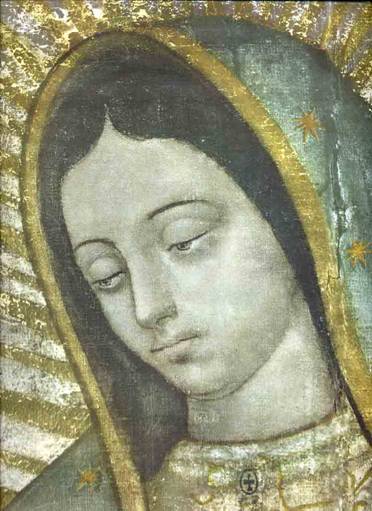
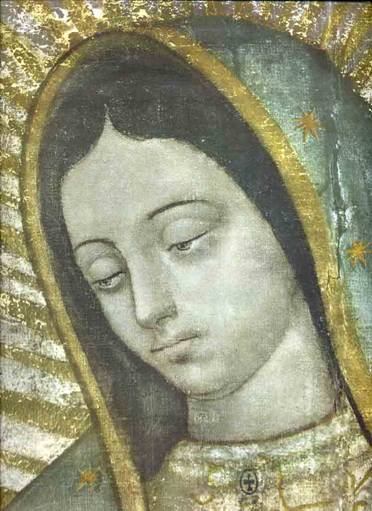
Our Lady of Guadalupe

Our Lady of Guadalupe

Pillar of Scourging of Our Lord JESUS

Pillar of Scourging of Our Lord JESUS

Shroud of Turin

Shroud of Turin