
Showing posts with label Saint. Show all posts
Showing posts with label Saint. Show all posts
Wednesday, October 28, 2009
Friday, June 19, 2009
Not looking at the mirror
Spiritual Bouquet: Everyone who has left house, or brothers, or sisters, or father, or mother or wife, or children, or lands, for My Name's sake and for the Gospel's sake, shall receive now in the present time a hundredfold -- along with persecutions, and in the age to come life everlasting. St. Matthew 19:29/St. Mark 10:29-30

SAINT JULIANA FALCONIERI
Virgin
(1270-1340)
Saint Juliana Falconieri was born in 1270, in answer to prayer. Her father was the builder of the splendid church of the Annunziata in Florence, while her uncle, Saint Alexis Falconieri, became one of the seven Founders of the Servite Order. Under his surveillance Juliana grew up “more like an angel than a human being,” as he said. Her great modesty was remarkable; never during her entire lifetime did she look at her reflection in a mirror. The mere mention of sin made her shudder and tremble, and once, on hearing of a scandal, she fainted.
[Similar example of St. Gemma Galgani: As she advanced in years, her love of the angelic virtue of purity and her desire to preserve it without spot grew with her. This was a special object of her mortifications, penances and the custody of her senses. It seemed to her that any liberty, however innocent and insignificant it may be, might discolor this beautiful flower, and so as to avoid this she took every precaution. She never went near a mirror, not even to do her hair or wipe away the stains of blood that flowed from her forehead when crowned with mystic thorns, or to wipe the blood from her eyes during her dolorous contemplation. And when during impulses of Divine love, her heart took fire and burned the corresponding exterior part of her skin, and when by a dart of fire from the side of Jesus Crucified she felt a large wound open in her side; and when her heart itself by its mysterious throbbings greatly distorted and curved three of her ribs, although ignoring at first what such phenomena meant, she refrained from looking at or touching herself, and never did so on the frequent renewal of these various wonders. http://www.stgemmagalgani.com/2009/04/st-gemmas-heroic-chastity-and-purity.html ]
Her devotion to the sorrows of Our Lady drew her to the Servants of Mary or Servite Order, and at the age of fourteen, after refusing an offer of marriage, she received the habit from Saint Philip Benizi, General of the Order. Her sanctity attracted many novices, for whose direction she was bidden to draw up a rule, and thus she became foundress of the Mantellate.
She was the servant of her Sisters rather than their mistress, while outside her convent she led a life of apostolic charity, converting sinners, reconciling enemies, and healing the sick. She was sometimes rapt for whole days in ecstasy, and her prayers saved the Servite Order when it was in danger of being suppressed.
Saint Juliana in her old age suffered various painful illnesses. She was wasting away through a disease of the stomach which prevented her taking food, and bore her silent agony with constant cheerfulness, grieving only for the privation of Holy Communion. At last, when in her seventieth year she was at the point of death, she begged to be allowed once more to see and adore the Blessed Sacrament. It was brought to her cell and reverently laid on a corporal, which was placed over her heart. At this moment she expired, and the Sacred Host disappeared. After her death the form of the Host was found stamped upon her heart, at the exact spot over which the Blessed Sacrament had been placed. Saint Juliana died in her convent in Florence in 1340. Miracles have been frequently effected through her intercession.
Reflection. “Meditate often,” says Saint Paul of the Cross, “on the sorrows of the Blessed Mother, sorrows inseparable from those of Her beloved Son. If you seek the Cross, there you will find the Mother; and where the Mother is, there also is the Son.”
Source: Little Pictorial Lives of the Saints, a compilation based on Butler’s Lives of the Saints, and other sources by John Gilmary Shea (Benziger Brothers: New York, 1894).


Tuesday, April 7, 2009

Thursday, March 26, 2009

Tuesday, March 24, 2009

Sunday, February 8, 2009


Wednesday, February 4, 2009

Saturday, January 31, 2009

Thursday, January 29, 2009

Tuesday, January 27, 2009
The Life of St. Charles Borromeo, Cardinal Archbishop of Milan By Giovanni Pietro Giussano, John Peter Giussano
The Life of St. Charles Borromeo, Cardinal Archbishop of Milan By Giovanni Pietro Giussano, John Peter Giussano: "...neither too slow nor too fast and he never made an unnecessary gesture. He received every one with a cheerful countenance, never laughed outright, but used to smile with much grace and sweetness. He was sparing of his words and seemed to labour from some impediment in his speech. Some thought he did so of set purpose in order that he might have time to think before he spoke so as not to offend in word. In giving audience he used to stand for the most part, or supported himself by a table or window sill. He was endowed by God with a bearing which had in it something divine and begot reverence in all who addressed him so that no one could speak to him except seriously and in fitting manner In his latter years he was somewhat bent by continual study and austerity, and consequently looked older than he really was. It may well be said that in labours he had lived a very long life and that in St Charles the words of Holy Scripture were verified "Being made perfect in a short space he fulfilled a long time"

Thursday, December 25, 2008
Mahomet was a disciple of the devil, and that his followers were in a state of perdition
St. George.
July 27.
SPAIN was honored by the martyrdom of many Christians under the Moors, in the ninth century. Among these was Aurelius, who was born in Corduba, of an opulent and noble family. His father was a Mahomedan, and his mother a Christian; but having been left an orphan very young, he was reared by his aunt in the Christian religion. The Mahomedan books which the Moors made him read served only to convince him of the falsity of their sect, and to make him more enamoured of the religion of Jesus Christ. Urged by his relatives to marry, he espoused Natalia, a Christian virgin, remark able for her piety.
Aurelius was related to a certain Christian named Felix, who had unhappily denied the faith; but although he repented of this sin he had not the courage to proclaim himself, and accordingly lived very retired with his wife; both families, however, lived on terms of the strictest intimacy.
Aurelius one day saw a certain Christian merchant called John cruelly scourged in the public square, and afterwards dragged through the city; after which sight he returned home and said to his wife: "Thou art continually exhorting me to retire from the world. I believe the hour has now arrived, in which God calls me to a more perfect life. Let us, therefore, from this day forward live as brother and sister; let us give our whole attention to the service of God, and prepare ourselves for martyrdom." Natalia instantly adopted the advice, and from that hour they gave themselves to a more holy life of prayer and mortification. Among other works of Christian charity, Aurelius visited the men and Natalia the women who were imprisoned for the faith; and among these confessors they met a holy priest named Eulogius, who afterwards wrote the Acts of their martyrdom. He advised Aurelius to put his children in a place of safety; and, having left them a competence, to sell the remainder of his goods, and give the money to the poor. Meanwhile, two holy virgins, Mary and Flora, who had been visited in prison by Natalia, suffered martyrdom, and afterwards appeared to her in a vision, dressed in white robes and resplendent with glory. Natalia at this happy sight said to them: " Shall I also have the blessed lot to tread the same path which con ducted you to heaven?" "Yes," they replied, "for thee also is martyrdom being prepared thou shalt shortly be with us in glory." Natalia related her vision to Aurelius. From that moment they thought of nothing but preparing themselves to die for Jesus Christ; and, according to the advice of Eulogius, distributed their property to the poor.
At this time there came to Corduba a certain monk, from Palestine, named George, who had lived for twenty-seven years in the monastery of St. Saba. He had been sent by the abbot of another monastery, containing nearly five hundred religious, to Africa, for the purpose of collecting alms; but on his arrival he found the Christians greatly oppressed by the Moors, and accordingly passed into Spain, where he found religion similarly circumstanced. Uncertain what course to adopt, he repaired to a certain monastery of exemplary religious, at Tabnes, to recommend himself to their prayers. He here met Natalia, who upon seeing him, exclaimed: "This good monk is destined to be our companion in martyrdom!" It so happened; for on the following day Natalia brought him to her own house at Corduba, where they found Felix and his wife Liliosa speaking with Aurelius concerning their desire of dying for Jesus Christ. Moved by divine grace, they all resolved to repair to the church, that, thus declaring them selves to be Christians, they might obtain the wished for crown.
They were not arrested in the church; but on their return, being asked by a Moorish officer why they had entered the church, they answered: "The faithful are wont to visit the tombs of the martyrs; and we have done so, because we are Christians." The officer instantly sent a report to the governor, and on the following day a guard was sent to the house. Having arrived at the door, they cried out: Come forth, ye wretches! come to the death, since ye are weary of life!" Aurelius and Felix appeared, accompanied by their wives; and George, the monk, perceiving that the soldiers heeded him not, said to them: "Why will ye compel Christians to follow your false religion ?" For these words he was instantly maltreated by the soldiers, with blows and kicks, and knocked prostrate on the ground; whereupon Natalia said: "Rise, brother, and we shall proceed."
The holy monk answered: "Meanwhile, sister, I have earned this much for Christ;" and having raised himself up very much bruised, he was in that state presented with the rest to the governor, who asked them why they thus blindly ran to death, and made them promises of the most ample rewards if they would renounce Jesus Christ. They answered with one accord: "These promises can avail nothing. We despise this present life, because we hope for a better one. We love our faith, and abhor every other religion." Hereupon the governor sent them to prison, and having found them constant in their faith at the end of five days, condemned them all to death, with the exception of George. But the holy monk having declared that Mahomet was a disciple of the devil, and that his followers were in a state of perdition, he also was condemned with his companions.
While they were proceeding to the place of execution Natalia encouraged the others to suffer with fortitude; which so irritated the soldiers that they ceased not to buffet and kick her until they arrived at the appointed place, where all these blessed martyrs received the crown, on the 2th July, in the year 852.
Victories of the Martyrs
Friday, December 5, 2008
The Life of St Anthony (251-356)
The Life of St Anthony (251-356)
St Antony the Great, or Antony of Thebes was born at Coma (Koman) in Upper Egypt. As described by St Athanasius, he sold his possessions and went to live in the wilderness for 20 years. When persuaded to come down he founded one of the oldest monastic communities. His example was celebrated throughout the Middle Ages - as was his determination to care for a garden with his own hands and the sweat of his brow.
(A.D. 356)
[From his life, by St. Athanasius]
St Anthony was born at Coma, a village near Heraclea, or Great Heracleopolis, in Upper Egypt, on the borders of Arcadia, or middle Egypt, in 251. His parents, who were Christians, and rich, to prevent his being tainted by bad example and vicious conversation, kept him always at home; so that he grew up unacquainted with any branch of human literature, and could read no language but his own. He was remarkable from his childhood for his temperance, a close attendance on church duties, and a punctual obedience to his parents. By their death he found himself possessed of a very considerable estate, and charged with the care of a younger sister, before he was twenty years of age. Nearly six months after, he heard read in the church those words of Christ to the rich young man: "Go sell what thou hast, and give it to the poor, and thou shalt have treasure in heaven." He considered these words as addressed to himself; going home, he made over to his neighbours three hundred
The devil assailed him by various temptations; first, he represented to him divers good works he might have been able to do with his estate in the world, and the difficulties of his present condition--a common artifice of the enemy, whereby he strives to make a soul slothful or dissatisfied in her vocation, in which God expects to be glorified by her. Being discovered and repulsed by the young novice, he varied his method of attack, and annoyed him night and day with filthy thoughts and obscene imaginations. Anthony opposed to his assaults the strictest watchfulness over his senses, austere fasts, humility, and prayer, till Satan, appearing in a visible form, first of a woman coming to seduce him, then of a black boy to terrify him, at length confessed himself vanquished. The saint's food was only bread, with a little salt, and he drank nothing but water; he never ate before sunset, and sometimes only once in two or four days: he lay on a rush mat or on the bare floor. In quest of a more remote solitude he withdrew further from Coma, and hid himself in an old sepulchre; whither a friend brought him from time to time a little bread. Satan was here again permitted to assault him in a visible manner, to terrify him with dismal noises; and once he so grievously beat him that he lay almost dead, covered with bruises and wounds; and in this condition he was one day found by his friend, who visited him from time to time to supply him with bread during all the time he lived in the ruinous sepulchre. When he began to come to himself, though not yet able to stand, he cried out to the devils whilst he yet lay on the floor, "Behold! here I am; do all you are able against me: nothing shall ever separate me from Christ my Lord." Hereupon the fiends appearing again, renewed the attack, and alarmed him with terrible clamours and a variety of spectres, in hideous shapes of the most frightful wild beasts, which they assumed. to dismay and terrify him; till a ray of heavenly light breaking in upon him chased them away, and caused him to cry out, "Where wast thou, my Lord and my Master? Why wast thou not here, from the beginning of my conflict, to assuage my pains!" A voice answered: "Anthony, I was here the whole time; I stood by thee, and beheld thy combat: and because thou hast manfully withstood thy enemies, I will always protect thee, and will render thy name famous throughout the earth." At these words the saint arose, much cheered and strengthened, to pray and return thanks to his deliverer. Hitherto the saint, ever since his retreat in 272, had lived in solitary places, not very far from his village; and St. Athanasius observes, that before him many fervent persons led retired lives in penance and contemplation near the towns; others remaining in the towns imitated the same manner of life.
To satisfy the importunities of others, about the year 305, the fifty-fifth of his age, he came down from his mountain, and founded his first monastery at Phaium. The dissipation occasioned by this undertaking led him into a temptation of despair, which he overcame by prayer and hard manual labour. In this new manner of life his daily refection was six ounces of bread soaked in water, with a little salt; to which he sometimes added a few dates. He took it generally after sunset, but on some days at three o'clock; and in his old age he added a little oil. Sometimes he ate only once in three or four days, yet appeared vigorous, and always cheerful: strangers knew him from among his disciples by the joy which was always painted on his countenance, resulting from the inward peace and composure of his soul. Retirement in his cell was his delight, and divine contemplation and prayer his perpetual occupation. Coming to take his refection, he often burst into tears, and was obliged to leave his brethren and the table without touching any nourishment, reflecting on the employment of the blessed spirits in heaven, who praise God without ceasing. He exhorted his brethren to allot the least time they possibly could to the care of the body. Notwithstanding which, he was very careful never to place perfection in mortification, as Cassian observes, but in charity, in which it was his whole study continually to improve his soul. His under garment was sackcloth, over which he wore a white coat of sheepskin with a girdle. He instructed his monks to have eternity always present to their minds, and to reflect every morning that perhaps they might not live till night, and every evening that perhaps they might never see the morning; and to perform every action as if it were the last of their lives, with all the fervour of their souls to please God. He often exhorted them to watch against temptations, and to resist the devil with vigour: and spoke admirably of his weakness, saying, "He dreads fasting, prayer, humility, and good works: he is not able even to stop my mouth who speak against him. The illusions of the devil soon vanish, especially if a man arms himself with the sign of the cross. The devils tremble at the sign of the cross of our Lord, by which he triumphed over and disarmed them." He told them in what manner the fiend in his rage had assaulted him by visible phantoms, but that these disappeared whilst he persevered in prayer. He told them, that once when the devil appeared to him in glory, and said, "Ask what you please; I am the power of God ": he invoked the holy name of Jesus, and he vanished. Maximinus renewed the persecution in 311; St. Anthony, hoping to receive the crown of martyrdom, went to Alexandria, served and encouraged the martyrs in the mines and dungeons, before the tribunals, and at the places of execution. He publicly wore his white monastic habit, and appeared in the sight of the governor; yet took care never presumptuously to provoke the judges, or impeach himself, as some rashly did. In 312, the persecution being abated, he returned to his monastery and immured himself in his cell. Some time after he built another monastery called Pispir, near the Nile; but he chose, for the most part, to shut himself up in a remote cell upon a mountain of difficult access, with Macarius, a disciple, who entertained strangers. If he found them to be
St. Anthony, in the year 339, saw in a vision, under the figure of mules kicking down the altar, the havoc which the Arian persecution made two years after in Alexandria, and clearly foretold it, as St. Athanasius, St. Jerome, and St. Chrysostom assure us. He would not speak to a heretic, unless to exhort him to the true faith; and he drove all such from his mountain, calling them venomous serpents. At the request of the bishops, about the year 355, he took a journey to Alexandria to confound the Arians, preaching aloud in that city that God the Son is not a creature, but of the same substance with the Father; and that the impious Arians, who called him a creature, did not differ from the heathens themselves, "who worshipped and served the creature rather than the Creator." All the people ran to see him, and rejoiced to hear him; even the pagans, struck with the dignity of his character, flocked to him, saying, "We desire to see the man of God." He converted many, and wrought several miracles: St. Athanasius conducted him back as far as the gates of the city, where he cured a girl possessed by the devil. Being desired by the duke or general of Egypt to make a longer stay in the city than he had proposed, he answered: "As fish die if they leave the water, so does a monk if he forsakes his solitude."
St. Jerome and Rufin relate that at Alexandria he met with the famous Didymus, and told him that he ought not to regret much the loss of eyes, which were common to ants and flies, but to rejoice in the treasure of that interior light which the apostles enjoyed, and by which we see God, and kindle the fire of his love in our souls. Heathen philosophers, and others, often went to dispute with him, and always returned much astonished at his humility, meekness, sanctity, and extraordinary wisdom. He admirably proved to them the truth and security of the Christian religion, and confirmed it by miracles. "We," said he, "only by naming Jesus Christ crucified, put to flight those devils which you adore as gods; and where the sign of the cross is formed, magic and charms lose their power." At the end of this discourse he invoked Christ, and signed with the cross twice or thrice several persons possessed with devils; in the same moment they stood up sound and in their senses, giving thanks to God for his mercy in their regard. When certain philosophers asked him how he could spend his time in solitude without the pleasure of reading books, he replied that nature was his great book, and amply supplied the want of others. When others, despising him as an illiterate man, came with the design to ridicule his ignorance, he asked them with great simplicity, which was first, reason or learning, and which had produced the other? The philosophers answered, "Reason, or good sense." "This, then," said Anthony, "suffices." The philosophers went away astonished at the wisdom and dignity with which he prevented their objections. Some others demanding a reason of his faith in Christ, on purpose to insult it, he put them to silence by showing that they degraded the notion of the divinity by ascribing to it infamous human passions, but that the humiliation of the cross is the greatest demonstration of infinite goodness, and its ignominy appears the highest glory, by the triumphant resurrection, the miraculous raising of the dead, and curing of the blind and the sick. He then admirably proved that faith in God and his works is more clear and satisfactory than the sophistry of the Greeks. St. Athanasius mentions that he disputed with these Greeks by an interpreter. Our holy author assures us that no one visited St. Anthony under any affliction and sadness who did not return home full of comfort and joy; and he relates many miraculous cures wrought by him, also several heavenly visions and revelations with which he was favoured. Belacius, the duke or general of Egypt, persecuting the Catholics with extreme fury, St. Anthony, by a letter, exhorted him to leave the servants of Christ in peace. Belacius tore the letter, then spit and trampled upon it, and threatened to make the abbot the next victim of his fury; but five days after, as he was riding with Nestorius, governor of Egypt, their horses began to play and prance, and the governor's horse, though otherwise remarkably tame, by justling, threw Belacius from his horse, and by biting his thigh tore it in such a manner than the general died miserably on the third day. About the year 337, Constantine the Great and his two sons, Constantius and Constans, wrote a joint letter to the saint, recommending themselves to his prayers, and desiring an answer. St. Anthony, seeing his monks surprised, said, without being moved, "Do not wonder that the emperor writes to us, one man to another; rather admire that God should have wrote to us, and that he has spoken to us by his Son." He said he knew not how to answer it: at last, through the importunity of his disciples, he penned a letter to the emperor and his sons, which St. Athanasius has preserved; and in which he exhorts them to the contempt of the world, and the constant remembrance of the judgment to come. St. Jerome mentions seven other letters of St. Anthony to divers monasteries, written in the style of the apostles, and filled with their maxims: several monasteries of Egypt possess them in the original Egyptian language. We have them in an obscure, imperfect, Latin translation from the Greek. He inculcates perpetual watchfulness against temptations, prayer, mortification, and humility. He observes that as the devil fell by pride, so he assaults virtue in us principally by that temptation. A maxim which he frequently repeats is, that the knowledge of ourselves is the necessary and only step by which we can ascend to the knowledge and love of God. The Bollandists give us a short letter of St. Anthony to St. Theodorus, Abbot of Tabenna, in which he says that God had assured him in a revelation that he showed mercy to all true adorers of Jesus Christ, though they should have fallen, if they sincerely repented of their sin. No ancients mention any monastic rule written by St. Anthony. His example and instructions have been the most perfect rule for the monastic life to all succeeding ages. It is related that St. Anthony, hearing his disciples express their surprise at the great multitudes who embraced a monastic life, and applied themselves with incredible ardour to the most austere practices of virtue, told them with tears that the time would come when monks would be fond of living in cities and stately buildings, and of eating at dainty tables, and be only distinguished from persons of the world by their habit, but that still some among them would arise to the spirit of true perfection, whose crown would be so much the greater, as their virtue would be more difficult, amidst the contagion of bad example. In the discourses which this saint made to his monks, a rigorous self-examination upon all their actions, every evening, was a practice which he strongly inculcated. In an excellent sermon which he made to his disciples, recorded by St. Athanasius, he pathetically exhorts them to contemn the whole world for heaven, to spend every day as if they knew it to be the last of their lives, having death always before their eyes, continually to advance in fervour, and to be always armed against the assaults of Satan, whose weakness he shows at length. He extols the efficacy of the sign of the cross in chasing him and dissipating his illusions, and lays down rules for the discernment of spirits, the first of which is that the devil leaves in the soul impressions of fear, sadness, confusion, and disturbance.
St. Anthony performed the visitation of his monks a little before his death, which he foretold them with his last instructions; but no tears could move him to die among them. It appears from St. Athanasius that the Christians had learned from the pagans their custom of embalming the bodies of the dead, which abuse, as proceeding from vanity and sometimes superstition, St. Anthony had often condemned: this he would prevent, and ordered that his body should be buried in the earth as the patriarchs were, and privately, on his mountain, by his two disciples, Macarius and Amathas, who had remained with him the last fifteen years, to serve him in his remote cell in his old age. He hastened back to that solitude, and some time after fell sick: he repeated to these two disciples his orders for their burying his body secretly in that place, adding, "In the day of the resurrection, I shall receive it incorruptible from the hand of Christ." He ordered them to give one of his sheep-skins, with a cloak in which he lay, to the Bishop Athanasius, as a public testimony of his being united in faith and communion with that holy prelate; to give his other sheep-skin to the Bishop Serapion; and to keep for themselves his sackcloth. He added, "Farewell, my children, Anthony is departing, and will be no longer with you." At these words they embraced him, and he stretching out his feet, without any other sign, calmly ceased to breathe. His death happened in the year 356, probably on the 17th of January, on which the most ancient Martyrologies name him, and which the Greek empire kept as a holyday soon after his death. He was one hundred and five years old.
A most sublime gift of heavenly contemplation and prayer was the fruit of this great saint's holy retirement. But the foundation of his most ardent charity, and that sublime contemplation by which his soul soared in noble and lofty flights above all earthly things, was laid in the purity and disengagement of his affections, the contempt of the world, a most profound humility, and the universal mortification of his senses and of the powers of his soul. Hence flowed that constant tranquillity and serenity of his mind, which was the best proof of a perfect mastery of his passions. St. Athanasius observes of him, that after thirty years spent in the closest solitude, "he appeared not to others with a sullen or savage, but with a most obliging sociable air." A heart that is filled with inward peace, simplicity, goodness, and charity is a stranger to a lowering or contracted look. The main point in Christian mortification is the humiliation of the heart, one of its principal ends being the subduing of the passions. Hence true virtue always increases the sweetness and gentleness of the mind, though this is attended with an invincible constancy, and an inflexible firmness in every point of duty. That devotion or self-denial is false or defective which betrays us into pride or uncharitableness; and whatever makes us sour, morose, or peevish makes us certainly worse, and instead of begetting in us a nearer resemblance of the divine nature, gives us a strong tincture of the temper of devils.
Games, amusements, recreations she would not hear of
From her infancy she had become mistress of her eyes, and kept them habitually lowered, but without affectation. As she advanced in years and in virtue she became more firmly established in this practice, owing to a resolution she made, when one day in church she happened to look with curiosity, for a moment, at the dress of a little girl who sat next her. She was so angry with herself for this, which seemed to her a crime, that she resolved never more to turn her eyes to look willfully at anyone in this world. From that day forward those innocent eyes remained closed to exterior things and subject to her will. In order to make her use them, a formal command was needed. She then obeyed but only for a few seconds and again, modestly blushing, lowered them. On this account, whoever desired to observe the beauty of her soul that shone in her eyes was obliged to do so while she was in ecstasy, as then she generally kept them raised to Heaven.
As to her sense of taste, nothing could induce her to gratify it. No one was able to ascertain what meat or drink pleased her most, and in order to induce her to partake of what was on the family table it was necessary to press her, otherwise she would deprive herself of what was absolutely necessary. To hide her mortification she used a thousand artifices, feigning to take food while her hands moved but nothing entered her mouth. She went so far as to carry into effect the thought of making a small hole in her spoon, so that the broth might leak through before she brought it to her lips. We have seen that she found pretexts to rise frequently from table, now for one thing, now for another. When in the kitchen helping the servant, she would never taste any of the viands, [articles of food] nor would she ever partake of sweets or fruits that were offered her outside of mealtime. And in order not to be wanting in courtesy by refusal, she managed gracefully and dexterously to get away.
Being a healthy girl she had a natural taste for food and a good appetite. This seemed to her a sort of derangement, and little short of sensuality. With a view to overcome it she would willingly on her part have abstained from taking any nourishment, but this was not allowed her. She thought and rethought, and at last, all gladness at having found a means of remedying her difficulty, she came to propose it to me. Note with what delicate skillfulness she did so.
Father, for a long time Jesus seems to have inspired me to ask you a favor. Don't be vexed with me, for in any case I will do as you wish. There will certainly be no harm in granting my request, but you will have a thousand reasons to bring forward against it: that I am thin, that it is not necessary, etc. But these are valueless reasons--don't wonder at my way of putting it, it is Gemma who writes. Listen, will you be content with my asking Jesus the grace not to let me feel any satisfaction in taking food, as long as I live? Oh, this favor is necessary, and I hope Jesus will tell you to grant it to me. At all events I am content.
As I did not answer this letter, she repeated her request several times. And at last, more to see how such an extraordinary thing would end than from any other motive, I gave my consent. Then the simple child went at once to speak with her Jesus, and at once her prayer was granted. From that day forward she lost all sensibility of palate and never again felt any impression of taste in eating and drinking; neither more nor less than if she had eaten straw or drunk only water. Thus did this young girl mortify a sense that may be considered one of the most difficult to subdue.
The same may be said of the mortification of her other senses. She was never known to gratify herself with the perfume of flower or other scents. As to her sense of speech, she seemed almost to have no tongue, so rigidly did she bridle it; and yet she continually reproached herself with having failed in words, and renewed with earnestness her resolution to curb the erring member. On one occasion she wept an entire day at Our Lord's feet because, not having been able to put off some friends who came to see her, she spent a short time talking with them on innocent matters that seemed to her excessively worldly. "O God," she exclaimed, "and I have allowed myself to speak of such things! Oh tongue, wicked tongue, from this day forward I shall know how to keep thee in bounds!" At another time, humbling herself as she was accustomed to do after her victories in the spiritual combat, she wrote thus: "Yesterday I gained a good victory over my worldly tongue, but I had a hard struggle to keep from speaking! And then I more resolutely renewed my determination never to answer unless questioned. If you only knew what a storm there was between Aunt and me! But silence has overcome all. I have begun, I may tell you, to keep these my resolutions, but with such difficulty!"
The fact was, she began to observe them when she was almost a baby, with only this difference: that then in order not to transgress with her tongue in any dispute, she got out of the way and hid herself; but when more advanced in fears and in virtue, she remained in modest silence, allowing her adversary to cool down. Of curiosity in Gemma it is needless to speak, inasmuch as, dead to herself, she cared for nothing in this world. It all wearied and weighed on her. Games, amusements, recreations she would not hear of; and not even in the days of her infancy did she care for them. One fear at carnival time, an attempt was made to take her with other children to some private theatricals. She was dismayed at it, and so influenced her spiritual Father, convincing him with such strong arguments that, through compassion, he caused her to be left at home alone.
Excerpt from The Life of St. Gemma Galgani, Ch. 17--St. Gemma's Heroic Mortification.
As to her sense of taste, nothing could induce her to gratify it. No one was able to ascertain what meat or drink pleased her most, and in order to induce her to partake of what was on the family table it was necessary to press her, otherwise she would deprive herself of what was absolutely necessary. To hide her mortification she used a thousand artifices, feigning to take food while her hands moved but nothing entered her mouth. She went so far as to carry into effect the thought of making a small hole in her spoon, so that the broth might leak through before she brought it to her lips. We have seen that she found pretexts to rise frequently from table, now for one thing, now for another. When in the kitchen helping the servant, she would never taste any of the viands, [articles of food] nor would she ever partake of sweets or fruits that were offered her outside of mealtime. And in order not to be wanting in courtesy by refusal, she managed gracefully and dexterously to get away.
Being a healthy girl she had a natural taste for food and a good appetite. This seemed to her a sort of derangement, and little short of sensuality. With a view to overcome it she would willingly on her part have abstained from taking any nourishment, but this was not allowed her. She thought and rethought, and at last, all gladness at having found a means of remedying her difficulty, she came to propose it to me. Note with what delicate skillfulness she did so.
Father, for a long time Jesus seems to have inspired me to ask you a favor. Don't be vexed with me, for in any case I will do as you wish. There will certainly be no harm in granting my request, but you will have a thousand reasons to bring forward against it: that I am thin, that it is not necessary, etc. But these are valueless reasons--don't wonder at my way of putting it, it is Gemma who writes. Listen, will you be content with my asking Jesus the grace not to let me feel any satisfaction in taking food, as long as I live? Oh, this favor is necessary, and I hope Jesus will tell you to grant it to me. At all events I am content.
As I did not answer this letter, she repeated her request several times. And at last, more to see how such an extraordinary thing would end than from any other motive, I gave my consent. Then the simple child went at once to speak with her Jesus, and at once her prayer was granted. From that day forward she lost all sensibility of palate and never again felt any impression of taste in eating and drinking; neither more nor less than if she had eaten straw or drunk only water. Thus did this young girl mortify a sense that may be considered one of the most difficult to subdue.
The same may be said of the mortification of her other senses. She was never known to gratify herself with the perfume of flower or other scents. As to her sense of speech, she seemed almost to have no tongue, so rigidly did she bridle it; and yet she continually reproached herself with having failed in words, and renewed with earnestness her resolution to curb the erring member. On one occasion she wept an entire day at Our Lord's feet because, not having been able to put off some friends who came to see her, she spent a short time talking with them on innocent matters that seemed to her excessively worldly. "O God," she exclaimed, "and I have allowed myself to speak of such things! Oh tongue, wicked tongue, from this day forward I shall know how to keep thee in bounds!" At another time, humbling herself as she was accustomed to do after her victories in the spiritual combat, she wrote thus: "Yesterday I gained a good victory over my worldly tongue, but I had a hard struggle to keep from speaking! And then I more resolutely renewed my determination never to answer unless questioned. If you only knew what a storm there was between Aunt and me! But silence has overcome all. I have begun, I may tell you, to keep these my resolutions, but with such difficulty!"
The fact was, she began to observe them when she was almost a baby, with only this difference: that then in order not to transgress with her tongue in any dispute, she got out of the way and hid herself; but when more advanced in fears and in virtue, she remained in modest silence, allowing her adversary to cool down. Of curiosity in Gemma it is needless to speak, inasmuch as, dead to herself, she cared for nothing in this world. It all wearied and weighed on her. Games, amusements, recreations she would not hear of; and not even in the days of her infancy did she care for them. One fear at carnival time, an attempt was made to take her with other children to some private theatricals. She was dismayed at it, and so influenced her spiritual Father, convincing him with such strong arguments that, through compassion, he caused her to be left at home alone.
Excerpt from The Life of St. Gemma Galgani, Ch. 17--St. Gemma's Heroic Mortification.
Subscribe to:
Posts (Atom)
Sacred and Immaculate Hearts

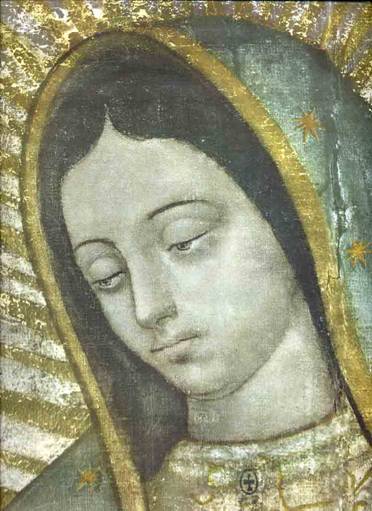
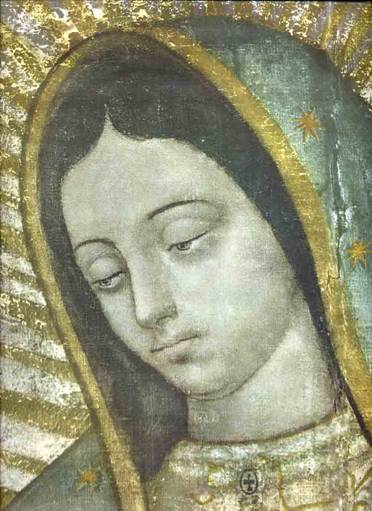
Our Lady of Guadalupe
Pillar of Scourging of Our Lord JESUS

Shroud of Turin


 Posts
Posts

