 "
"
Showing posts with label humility. Show all posts
Showing posts with label humility. Show all posts
Wednesday, April 22, 2009
Sunday, February 8, 2009
"It is a good practice to enter into details in humiliating things when prudence allows them to be publicly declared, on account of the profit we derive from overcoming ourselves in the repugnance we feel in disclosing and making known what we would keep secret. St. Augustine published the secret sins of his youth, composing a book on them, that thus the entire earth might learn the extravagance of his errors and the excess of his licentiousness. And that vessel of election, St. Paul, that great apostle who was ravished to the third heaven, has he not avowed that he persecuted the Church? He has even left it in writing, so that it may be known to the consummation of ages that he was a persecutor. Indeed, if we be not watchful over ourselves and do not do some violence to ourselves in declaring our misery and our failings, we will soon confine ourselves to what may occasion esteem, and we will conceal what will give confusion. We inherit this from our first father, Adam, who, after having offended God, went and hid himself. --St. Vincent de Paul


Saturday, January 31, 2009
despise oneself
To despise oneself and despise no one; to despise the world and despise being despised (St. Louis Bertrand).
Thursday, December 25, 2008
II. — SECOND MEANS. — Sincere Humility.
II. — SECOND MEANS. — Sincere Humility.
The second means is sincere humility. Jesus Christ, says St. Augustin, does not say to us, learn of Me to work miracles, but learn of Me, because I am meek and humble of heart, to give us to understand, that, without humility, there is no true piety. We are sufficiently convinced of the necessity of this virtue ; all the difficulty consists in knowing what is true humility. Many think they are truly humble, as soon as they have a low opinion of themselves. But they deceive themselves, if they are not at the same time well pleased, that others should entertain the same opinion of them. It is not enough that we acknowledge ourselves to possess no virtue or merit. We must believe it. We must be pleased that others believe it. The first step to be taken in gaining this virtue, is to beg it earnestly of God. The next is firmly to convince ourselves, by means of serious and frequent reflection on ourselves, of our poverty and our own imperfections. The remembrance of what we have been, and the thought of what we may be, serve greatly to humble us. The truly virtuous think little of others, and occupy themselves solely with their own imperfections. The truly humble are scandalized at nothing, because they know their own weakness so well. They see themselves so near the precipice, and they are so much afraid of falling, that they are not surprised if others fall. The less we speak of ourselves, the more closely we conform ourselves to true humility. Those affected discourses, by which we wish to make it appear that we have little esteem for ourselves, have no effect usually but to gain us praise. The most certain mark of sincere humility is to have a special love for those who despise us : never to avoid any humiliations that present themselves to us ; not to take pleasure in vain thoughts and vain projects for the future, which only serve to nourish a secret pride within us ; never to speak to our own advantage ; never to complain and not to allow others to complain of anything Almighty God allows to happen to us ; to excuse the failings of our neighbour; never to be troubled at our own relapses ; to defer to others in all things ; never to undertake anything but with diffidence in ourselves, and to have little esteem for what we do. Finally, to pray much, and to speak little.
Any one who is convinced that he is very miserable, is not offended if he is despised : he sees that it is only just. A humble man, whatever bad treatment he may receive, thinks that justice is done him. Men do not esteem me ; they are right, they agree in this with God, and with the Angels. Whoever has deserved hell, thinks that contempt is his due. It is not meant by this, that we are obliged to receive a humiliation with sensible pleasure. Contempt is naturally disagreeable. But not to complain, to be silent under contempt, to thank God for it, and to pray to Him for those whom He makes use of to humble us, whatever repugnance nature may feel in submitting, are certain marks of sincere humility, without which there is no virtue. We have enemies, says St. Paul, within and without us, who spread snares for us on every side. The love of humility, of abjection, of a hidden and obscure life, is a powerful remedy against so many evils. There is no peace but in the forgetfulness of ourselves. If we wish to become perfect, we must resolve to forget even our own spiritual interests, and to seek only the pure glory of God.
Friday, December 5, 2008

Sunday, November 23, 2008
Homer and Aristotle in Hell
"...It follows therefore that the glory of man is such as the life of man is. For although glory do continue after the end of our life, yet what shall that glory avail him that has no sense, nor feeling the thereof? What does it avail Homer now while thou so highly praise and commends his Iliads? Undoubtedly no more but as S. Jerome says speaking of Aristotle, "Woe be unto thee Aristotle, that are praised where thou art not, to wit, here in the world: and art tormented where thou art indeed: to wit, in hell." --Ven. Luis de Granada. Of Prayer and Meditation. Scolar Press, 1971.
Socrates, Cicero, Seneca, are said to have been acquainted with the knowledge of one Supreme God; but they had not courage to profess his worship, and in their public conduct basely sacrificed to stocks and stones with the vulgar. When men have banished from their heart the sense of religion, and despise the rights of justice, (and is this not the case with numbers?) will many of them scruple to offer incense to a statue, if by so doing they serve their ambition, their interest, or whatever may be their favorite passion?Where is the cause for surprise, then, if infidelity and irreligion be succeeded by idolatry? The Catholic Dogma
Virtues and Spiritual Doctrine of St. Vincent de Paul By Michel Ulysse Maynard, Abbe Maynard, Louise de Marillac: " "
"
Socrates, Cicero, Seneca, are said to have been acquainted with the knowledge of one Supreme God; but they had not courage to profess his worship, and in their public conduct basely sacrificed to stocks and stones with the vulgar. When men have banished from their heart the sense of religion, and despise the rights of justice, (and is this not the case with numbers?) will many of them scruple to offer incense to a statue, if by so doing they serve their ambition, their interest, or whatever may be their favorite passion?Where is the cause for surprise, then, if infidelity and irreligion be succeeded by idolatry? The Catholic Dogma
Virtues and Spiritual Doctrine of St. Vincent de Paul By Michel Ulysse Maynard, Abbe Maynard, Louise de Marillac: "
"
Subscribe to:
Comments (Atom)
Sacred and Immaculate Hearts

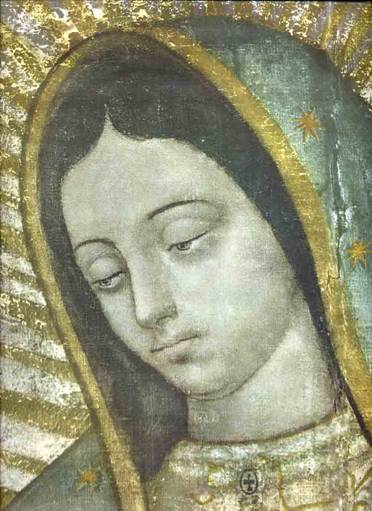
Our Lady of Guadalupe
Pillar of Scourging of Our Lord JESUS

Shroud of Turin


 Posts
Posts

