 "
"
Showing posts with label lukewarmness. Show all posts
Showing posts with label lukewarmness. Show all posts
Sunday, April 12, 2009
Friday, December 26, 2008
First Obstacle--Tepidity
Devotion to the Sacred Heart of Jesus -- Fr. Croiset
I. FIRST OBSTACLE. — Tepidity.
As the devotion to the Sacred Heart of Jesus Christ is a continual exercise of ardent love, it is very plain that tepidity is one of its greatest obstacles, and hinders all its fruit. Though the Son of God has an infinite hatred of sin, He has not a horror of the sinner. He calls him, He seeks him, and has compassion on him. But His Divine Heart cannot endure a tepid soul. I would thou wert cold or hot, says our Blessed Saviour to us, but because thou art lukewarm, I will begin to vomit thee out of my mouth. The Heart of Jesus Christ looks for pure souls, who are capable of His love.
His Sacred Heart is always liberal. It seeks souls that are in a state to receive Its favours, and to reach the degree of perfection for which He destines them. This is what is not to be found in a soul that lives in tepidity. A tepid soul is in a state of blindness, caused by the passions that tyrannize over her ; by the continual dissipation in which she lives, and which prevents her from entering into herself; by the multitude of sins that she commits, and by the subtraction of heavenly graces, which her resistance draws upon her. This blindness leads to the formation of a false conscience, under cover of which, as if in security, a soul whilst frequenting the Sacraments, may remain for many years in considerable sins. They are hidden from her, or disguised by passion, because she has neither the will, nor the courage to correct herself of them.
We sometimes see religious persons, or seculars who make a profession of piety, nourish secret aversions, envenomed jealousies, dangerous affections, a spirit of bitterness or murmuring against their superiors, a fund of self-love and pride, that diffuses itself over almost all their actions, and other failings of a like nature. In the midst of these they live tranquilly, falsely persuading, or trying to persuade themselves, that there is nothing very sinful in all this, and seeking reasons to excuse faults, which Almighty God condemns as grievous sins, and which they themselves will condemn at the hour of death, when passion will not prevent their seeing things as they really are.
What makes this state still more perilous, and obliges Jesus Christ to reject a tepid soul, is, that she is in a certain way, beyond hope, for tepidity is scarcely ever cured. As the sins which a tepid soul commits, are not of that gross and scandalous kind, that horrify a soul which has a little fear remaining, but are purely interior and do not pass beyond the heart, they easily escape the notice of a conscience that is not over particular, and of a soul that pays little attention to herself. Hence, as she does not know the greatness of her malady, she does not take the trouble to remedy it. Whereas, a great sinner, as he easily knows his sins, is in a better state to feel their weight and conceive a horror of them. And in this sense our Lord says, it is better to be cold than lukewarm.
The most solid practices of devotion are useless to a soul that is in this unhappy state, either because the little profit she derives from the holiest exercises of piety takes from her the desire of making use of them, or because, in consequence of her being used to these holy exercises, they have less effect upon her. The great and terrible truths of salvation, which terrify by their novelty, and shake with their force the greatest sinners, make scarcely any impression on her, in consequence of her having gone over them so frequently and with so little profit. As soon as a soul gives herself up to tepidity, she no longer thinks of anything but herself. She continually seeks after what can give her pleasure. She has a delicacy that sometimes surpasses that of the most sensual persons : a love of self, which not being weakened by foreign objects, is the stronger from being shut up in herself alone, and is entirely applied in forming for herself an easy and tranquil life. A soul in this state, insensible to the most striking truths of eternity, is still more insensible to the manifest proofs of the love of Jesus Christ for us. She is too far removed from the necessary dispositions for devotion to the Sacred Heart of Jesus, to draw any profit from it.
The marks by which we may know if we are in the dangerous state of tepidity, are :
1. Great negligence in all spiritual exercises; prayer without attention, confessions without amendment, communions without preparation and without fruit.
2. The continual dissipation of a mind which is scarcely ever attentive to itself or to God, but which continually diffuses itself over all kinds of objects, and occupies itself in a thousand trifles.
3. A bad habit of performing her actions without any interior spirit, but either through caprice or habit, scarcely doing anything in which passion, self-love or human respect have not some share.
4. Sloth in acquiring the virtues belonging to her state.
5. A disgust for spiritual things, and especially an indifference for great virtues. The yoke of Jesus Christ begins to appear heavy ; the exercises of piety become burdensome ; the maxims of the Gospel regarding the hatred of self, the love of crosses and humiliations, the necessity of doing violence to oneself, of walking by the narrow way, seem impracticable. The continual exercise of modesty, mortification and interior recollection is found insupportable, the life of persons of solid virtue is regarded as unhappy, and the practice of virtue almost impossible.
The 6th effect of tepidity is an insensibility of conscience for lesser sins. We no longer feel remorse for our ordinary infidelities, or relapses, and we allow ourselves to commit all sorts of venial sins deliberately.
But how much is it to be feared that this want of tenderness of conscience — this facility in continually falling into the same faults, and in confessing them without amendment — this negligence — this contempt for small things — this indifference for the greater virtues — this inconstancy in the exercises of piety — this perpetual alternation between fervour and relaxation, may be visible signs of a dying faith, of an almost extinguished charity ? How much is it to be feared that this unhappy state of tepidity may lead us imperceptibly into that of hardness of heart and insensibility ? It is the more dangerous, as it is less perceived, and as its consequences are less feared. And yet, nothing is more common. Such persons as do not relish the devotion to the Sacred Heart of Jesus Christ, those who draw no fruit from its practice, have great reason to fear that this is the obstacle which occasions their disgust, and hinders them from profiting by the holiest exercises of piety.
As the fatal cause of this unhappy state of tepidity is generally to be found in a great fund of self-love, the means recommended in the following chapter, for subduing, or, at least, mortifying self-love, will serve as a remedy for tepidity, since true mortification is inseparable from fervour. What has been said of tepidity is partly drawn from the Spiritual Retreat, according to the spirit and method of Ignatius, composed by F. Nepveu, of the Society of Jesus. It may be useful to add the following reflections :
1. It is extraordinary that there should be any religious persons, who, after having been generous, in leaving great things for God, should prefer afterwards in religion to be deprived of the greater graces of God, rather than abandon some trifles which constantly retard their progress in the way of piety. For faults, however slight, when they are committed with advertence, are a continual impediment to that joy and ineffable sweetness, which are experienced by those who serve God with fervour.
2. It is no less extraordinary that persons who have made such great sacrifices to secure their salvation and merit a happy and tranquil death, for want of a little generosity die with disquiet and full of regret, after having so long and so greatly feared to die.
3. What is it that keeps us back ? It is not possible but that, in religion, we should frequently have good desires. But it is astonishing that we fail to execute them through a kind of sloth, of which worldly persons would not believe us capable. We had begun so well to serve God : did we intend then to deceive men ? If God was really the motive of our conversion, whence is it, that though the same motive continues, we do not persevere ?
4. It is certain either the Saints have done too much, or we do not do enough to become Saints. But some may say we must be Saints, to live as the Saints have lived. Let us rather say : we must become Saints ; and it is only by living like the Saints, that we can hope to become so.
5. We are not easily tired, we do not find the time too long, when amassing riches to leave to others, or when occupied in procuring ourselves a vain reputation in the world. But to acquire eternal felicity in heaven, we think we have always time enough. A person with fine natural gifts, great talents and a lively disposition, some may say, cannot make up his mind to lead a perfect life. But when did the finest natural qualities, which have always been great helps to attain the most exalted virtue, become obstacles to sanctity?
6. What an error it is to imagine that there can be any age or condition unsuited to the practice of the highest virtues ! What will these persons say when they shall be shown a multitude of Saints of every age, of every rank, who have become great Saints in every state, and in all sorts of employments ? Not only will the example of these Saints one day form our accusation, we shall be ourselves our own condemnation. Whilst we attempt to excuse our tepidity, and our negligence, by alleging our age, our employments and our condition, it will be shown to us, that at the same age, in the same employments, and the same condition, we have suffered and laboured more for the world, than Almighty God required of us to labour in order to gain heaven.
7. There is no one who would venture to say, or who would believe, that after spending ten years in the study of human sciences, he would think himself fortunate if he knew as much as he had learned in the first six months after he began his studies. Yet we find persons who make profession of piety, persons whose chief employment is to become perfect, who, after ten and twenty years of study and practice in the sublime science of salvation, are not ashamed to say, and are not displeased if others believe, that they would think themselves very happy, if they were as fervent, as mortified and as holy, as they were after the first six months of their perfect conversion. It is true that they manage to stupefy themselves, as it were, by exterior dissipation, and the insipid pleasures of a tepid life : but, sooner or later, they will arrive at the end of their life, and what sentiments will they have at the hour of death ?
8. Are we well convinced of the great truths of our religion ? If we do not believe, we do too much. But if we believe, certainly we do too little. What is it that is at stake ? So much is said of the importance of salvation, of the value of the soul, of eternity. Is it true that I am in the world only in order to save my soul? that Jesus Christ became man only to show us that this is the only business of mankind, that it alone deserves our application, alone demands our whole application, and depends on our application ? Is it true that if this affair succeeds ill all is lost? that to put oneself in danger of succeeding ill in this, is to risk all ; and that to live in tepidity, is to place ourselves in a kind of necessity of succeeding ill ? Is it true that this is the affair of eternity ? Can Almighty God have been deceived in saying that all the rest is of no consequence ? Can He have employed His care and His providence without sufficient purpose, in referring all things to this one end ? Is God then of so little consequence, that it can be an indifferent matter to us whether we lose Him? Why so many tears, so many and such bitter regrets in hell, if the good, which the damned have lost, deserved so little effort to secure it ? Why shudder at the very thought of eternity, if it matters so little whether we be eternally unhappy ? But do we show any great apprehension of this misfortune, if we take so little trouble to avoid it ? Are we taking much trouble if we continue in the tepidity and indifference in which we live ?
9. If we were careful to make these reflections frequently, we should be ashamed to lead a tepid life, and to be so backward in God's service. We should soon take the resolution of loving Jesus Christ. But alas ! after we have made these reflections, and have been moved by them, the moment afterwards we seek to distract ourselves, as if we were sorry to have made them, and to have been touched by them. "Compared to a man (says St. James ii. 23) beholding his own countenance in a glass. For he beheld himself, and went his way, and presently forgot what manner of man he was."


Friday, November 28, 2008
what laziness and what indifference we display!
http://writer.zoho.com/public/immaculate/Sermons-of-St.-Jean-Marie-Baptiste-Vianney
Alas, my dear brethren, what have we become even since our conversion? Instead of going always forward and increasing in holiness, what laziness and what indifference we display! God cannot endure this perpetual inconstancy with which we pass from virtue to vice and from vice to virtue. Tell me, my children, is not this the very pattern of the way you live? Are your poor lives anything other than a succession of good deeds and bad deeds? Is it not true that you go to Confession and the very next day you fall again -- or perhaps the very same day? .... How can this be, unless the religion you have is unreal, a religion of habit, a religion of long-standing custom, and not a religion rooted in the heart? Carry on, my friend; you are only a waverer! Carry on, my poor man; in everything you do, you are just a hypocrite and nothing else! God has not the first place in your heart; that is reserved for the world and the devil. How many people there are, my dear children, who seem to love God in real earnest for a little while and then abandon Him! What do you find, then, so hard and so unpleasant in the service of God that it has repelled you so strangely and caused you to change over to the side of the world? Yet at the time when God showed you the state of your soul, you actually wept for it and realised how much you had been mistaken in your lives. If you have persevered so little, the reason for this misfortune is that the devil must have been greatly grieved to have lost you because he has done so much to get you back. He hopes now to keep you altogether. How many apostates there are, indeed, who have renounced their religion and who are Christians in name only!
But, you will say to me, how can we know that we have religion in our hearts, this religion which is consistent?
My dear brethren, this is how: listen well and you will understand if you have religion as God wants you to have it in order to lead you to Heaven. If a person has true virtue, nothing whatever can change him; he is like a rock in the midst of a tempestuous sea. If anyone scorns you, or calumniates you, if someone mocks at you or calls you a hypocrite or a sanctimonious fraud, none of this will have the least effect upon your peace of soul. You will love him just as much as you loved him when he was saying good things about you. You will not fail to do him a good turn and to help him, even if he speaks badly of your assistance. You will say your prayers, go to Confession, to Holy Communion, you will go to Mass, all according to your general custom.
Tuesday, November 25, 2008
Lukewarm soul. St. Jean-Marie-Baptiste Vianney
http://writer.zoho.com/public/immaculate/Sermons-of-St.-Jean-Marie-Baptiste-Vianney
It is true that a Christian who lives in tepidity still regularly -- in appearance at least -- fulfils his duties. He will indeed get down on his knees every morning to say his prayers. He will go to the Sacraments every year at Easter and even several times during the course of the twelve months. But in all of this there will be such a distaste, so much slackness and so much indifference, so little preparation, so little change in his way of life, that it is easy to see that he is only fulfilling his duties from habit and routine .... because this is a feast and he is in the habit of carrying them out at such a time. His Confessions and his Communions are not sacrilegious, if you like, but they are Confessions and Communions which bear no fruit -- which, far from making him more perfect and more pleasing to God, only make him more unworthy. As for his prayers, God alone knows what -- without, of course, any preparation -- he makes of these.
In the morning it is not God who occupies his thoughts, nor the salvation of his poor soul; he is quite taken up with thoughts of work. His mind is so wrapped up in the things of earth that the thought of God has no place in it. He is thinking about what he is going to be doing during the day, where he will be sending his children and his various employees, in what way he will expedite his own work. To say his prayers, he gets down on his knees, undoubtedly, but he does not know what he wants to ask God, nor what he needs, nor even before whom he is kneeling. His careless demeanour shows this very clearly. It is a poor man indeed who, however miserable he is, wants nothing at all and loves his poverty. It is surely a desperately sick person who scorns doctors and remedies and clings to his infirmities.
You can see that this lukewarm soul has no difficulty, on the slightest pretext, in talking during the course of his prayers.
For no reason at all he will abandon them, partly at least, thinking that he will finish them in another moment. Does he want to offer his day to God, to say his Grace? He does all that, but often without thinking of the one who is addressed. He will not even stop working. If the possessor of the lukewarm soul is a man, he will turn his cap or his hat around in his hands as if to see whether it is good or bad, as though he had some idea of selling it. If it is a woman, she will say her prayers while slicing bread into her soup, or putting wood on the fire, or calling out to her children or maid. If you like, such distractions during prayer are not exactly deliberate. People would rather not have them, but because it is necessary to go to so much trouble and expend so much energy to get rid of them, they let them alone and allow them to come as they will.
The lukewarm Christian may not perhaps work on Sunday at tasks which seem to be forbidden to anyone who has even the slightest shred of religion, but doing some sewing, arranging something in the house, driving sheep to the fields during the times for Masses, on the pretext that there is not enough food to give them -- all these things will be done without the slightest scruple, and such people will prefer to allow their souls and the souls of their employees to perish rather than endanger their animals. A man will busy himself getting out his tools and his carts and harrows and so on, for the next day; he will fill in a hole or fence a gap; he will cut various lengths of cords and ropes; he will carry out the churns and set them in order. What do you think about all this, my brethren? Is it not, alas, the simple truth? ....
A lukewarm soul will go to Confession regularly, and even quite frequently. But what kind of Confessions are they? No preparation, no desire to correct faults, or, at the least, a desire so feeble and so small that the slightest difficulty will put a stop to it altogether. The Confessions of such a person are merely repetitions of old ones, which would be a happy state of affairs indeed if there were nothing to add to them. Twenty years ago he was accusing himself of the same things he confesses today, and if he goes to Confession for the next twenty years, he will say the same things. A lukewarm soul will not, if you like, commit the big sins. But some slander or back-biting, a lie, a feeling of hatred, of dislike, of jealousy, a slight touch of deceit or double-dealing -- these count for nothing with it. If it is a woman and you do not pay her all the respect which she considers her due, she will, under the guise of pretending that God has been offended, make sure that you realise it; she could say more than that, of course, since it is she herself who has been offended. It is true that such a woman would not stop going to the Sacraments, but her dispositions are worthy of compassion.
On the day when she wants to receive her God, she spends part of the morning thinking of temporal matters. If it is a man, he will be thinking about his deals and his sales. If it is a married woman, she will be thinking about her household and her children. If it is a young girl, her thoughts will be on her clothes.
If it is a boy, he will be dreaming about passing pleasures and so on. The lukewarm soul shuts God up in an obscure and ugly kind of prison. Its possessor does not crucify Him, but God can find little joy or consolation in his heart. All his dispositions proclaim that his poor soul is struggling for the breath of life.
After having received Holy Communion, this person will hardly give another thought to God in all the days to follow. His manner of life tells us that he did not know the greatness of the happiness which had been his.
A lukewarm Christian thinks very little upon the state of his poor soul and almost never lets his mind run over the past. If the thought of making any effort to be better crosses his mind at all, he believes that once he has confessed his sins, he ought to be perfectly happy and at peace. He assists at Holy Mass very much as he would at any ordinary activity. He does not think at all seriously of what he is doing and finds no trouble in chatting about all sorts of things while on the way there. Possibly he will not give a single thought to the fact that he is about to participate in the greatest of all the gifts that God, all-powerful as He is, could give us. He does give some thought to the needs of his own soul, yes, but a very small and feeble amount of thought indeed. Frequently he will even present himself before the presence of God without having any idea of what he is going to ask of Him. He has few scruples in cutting out, on the least pretext, the Asperges and the prayers before Mass. During the course of the service, he does not want to go to sleep, of course, and he is even afraid that someone might see him, but he does not do himself any violence all the same. He does not want, of course, to have distractions during prayer or during the Holy Mass, yet when he should put up some little fight against them, he suffers them very patiently, considering the fact that he does not like them. Fast days are reduced to practically nothing, either by advancing the time of the main meal or, under the pretext that Heaven was never taken by famine, by making the collation so abundant that it amounts to a full meal. When he performs good or beneficial actions, his intentions are often very mixed -- sometimes it is to please someone, sometimes it is out of compassion, and sometimes it is just to please the world. With such people everything that is not a really serious sin is good enough. They like doing good, being faithful, but they wish that it did not cost them anything or, at least, that it cost very little. They would like to visit the sick, indeed, but it would be more convenient if the sick would come to them. They have something to give away in alms, they know quite well that a certain person has need of help, but they wait until she comes to ask them instead of anticipating her, which would make the kindness so very much more meritorious. We will even say, my brethren, that the person who leads a lukewarm life does not fail to do plenty of good works, to frequent the Sacraments, to assist regularly at all church services, but in all of this one sees only a weak, languishing faith, hope which the slightest trial will upset, a love of God and of neighbour which is without warmth or pleasure. Everything that such a person does is not entirely lost, but it is very nearly so.
See, before God, my brethren, on what side you are. On the side of the sinners, who have abandoned everything and plunge themselves into sin without remorse? On the side of the just souls, who seek but God alone? Or are you of the number of these slack, tepid, and indifferent souls such as we have just been depicting for you? Down which road are you travelling?
Who can dare assure himself that he is neither a great sinner nor a tepid soul but that he is one of the elect? Alas, my brethren, how many seem to be good Christians in the eyes of the world who are really tepid souls in the eyes of God, Who knows our inmost hearts....
Let us ask God with all our hearts, if we are in this state, to give us the grace to get out of it, so that we may take the route that all the saints have taken and arrive at the happiness that they are enjoying. That is what I desire for you....
Subscribe to:
Comments (Atom)
Sacred and Immaculate Hearts

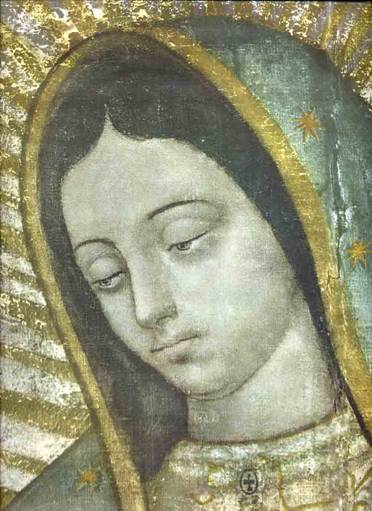
Our Lady of Guadalupe
Pillar of Scourging of Our Lord JESUS

Shroud of Turin


 Posts
Posts

