I. Consider first, that the Preacher is not here speaking of any class of men, whether just or sinners, but of the just only; because sinners know quite certainly that they are worthy of hatred, whereas the just do not know certainly that they are just; and therefore neither do they know certainly that they are worthy of love. And the reason of this difference is, that sin is altogether our own work, so that we may easily know whether we are guilty of it. But infused and inherent grace, which renders us just, is altogether the work of God, and an interior and imperceptible work, so that we cannot know that we are possessed of it. We do indeed know that it follows infallibly when preceded by the right dispositions; but who can assure us of possessing these? The only two channels which convey sanctifying grace to our souls are Baptism and Penance: the first cancels original, the second actual sin. The first requires the intention of the person who administers it, which is hidden from us; the second requires, in addition, on our part, a detestation of sin, which includes true repentance and a sincere resolution of amendment. And who can give us the assurance that we possess this in a sufficient degree? It is indeed written, "When thou shalt seek the Lord thy God thou shalt find Him;" but it is also added, "Yet so, if thou seek Him with all thy heart, and all the affliction of thy soul."1 Here is the uncertainty, and therefore, " No man knoweth whether he be worthy of love or hatred, but all things are kept uncertain for the time to come," that is to say, " for the time when Christ shall sit in judgment." Till then we must always live in serious uncertainty about ourselves, not even knowing whether we shall be saved. When therefore, it is here said, " Man knoweth not whether he be worthy of love or hatred," two kinds of hatred are meant. First, that simple hatred with which God regards the sinner when He sees him in a state of sin, and although He is angry with him on account of that sin, yet bears with him ; and this is the hatred of indignation. And secondly, that consummate hatred with which God regards him when He sees him in a state of sin, and is not only angry with him on account of that sin, but also allows him to die in it, and so to be damned ; and this is the hatred of reprobation. Is it possible that thou art not afraid at finding thyself in so terrible an uncertainty as this ? " Fear and trembling are come upon me, and darkness hath covered me,'"2 that is, "because darkness hath covered me"—"fear" as to the present, "trembling" as to the future.
Thursday, January 14, 2010
Wednesday, January 13, 2010
Ave Maria verse
FROM Instructions for the use of the beades
If my disciple thou wilt be,
If my disciple thou wilt be,
take up thy cross and follow me:
The cross that was most odious,
is by my death made glorious.
AVE MARIA
With humble mind I take my way
unto the Blessed Virgin pure:
Upon my knees Ave to say,
that she may help my sins to cure.
GRATIA PLENA
O Marie meek hail full of grace
Whom when Elizabeth did view
She said there was wither in place
the Mother of her Lord Iesu
DOMINVS TECVM
O Lady dear our Lord with thee,
whom shepherds first in manger find
A star from the east did guide king's three
to visit him, with devout mind.
BENEDICTA TV IN MVLIERIBVS
Among women thou blessed be,
who scathed the swords that infants slew:
Whiles Herod sought most cruelly,
with all to kill thy Son Iesu.
ET BENEDICTVS FRVCTVS VENTRIS TVI
The fruit of thy womb blessed be,
whom wrongfully to death they drew.
What greater cross could come to thee,
than this thou bear with Christ Iesu.
SANCTA MARIA ORA PRO NOBIS
O holy mother pray for me,
whose sins deserve eternal pain:
That after death my soul may be,
where my sweet Iesu now doeth reign.
Marie bear Christ at years fifteen.
he lived in earth three and thirty.
Fifteen years after was she seen.
Assumed to heaven at threescore three.


Monday, January 4, 2010
S. Augustine's admirable example of purity
S. Augustine being asked why he would not dwell with his sister, replied "because they are not my sisters that live with my sister." Without doubt it is evil to behold a woman, worse to speak to her, worst of all to touch her. Therefore Nicetius a very holy priest... very mindful of himself, was afraid to handle so much as the naked bodies of infants. For none he thought could be too wary in this respect, since pleasure is wont to insinuate itself so deceitfully.
http://cathom.blogspot.com/2009/03/important-passages-from-nicetas-or.html
S. Augustin himself (as Possidonius Bishop of Calame writeth of him) would not only not dwel in house with other women, or haue anie familiaritie with them: but not with his owne sister and brother's daughter; not so much in regard of themselues, as of other women that would be coming vnto them.
http://platus.springnote.com/
http://cathom.blogspot.com/2009/03/important-passages-from-nicetas-or.html
S. Augustin himself (as Possidonius Bishop of Calame writeth of him) would not only not dwel in house with other women, or haue anie familiaritie with them: but not with his owne sister and brother's daughter; not so much in regard of themselues, as of other women that would be coming vnto them.
http://platus.springnote.com/
Friday, December 25, 2009
St. Camillus's continual prayer
...He spent the greater part of both day and night in prayer, in reading, and meditation; nor could all the works of piety and mercy in which he was daily engaged distract him from the consideration of any of the eternal truths.
...
It is impossible to say how a man with a wounded leg, and with callosities on his knees like sharp bones, could remain so long keeling without any support.
...
He often recommended his religious not to forget to pray for the benefactors of the order, living and dead, for the soul in purgatory, for those who were living in mortal sin, and principally for those who were in their agony. He said more than once that every one of our Fathers, without leaving his own room, might be present by prayer and recommended the soul of every person in the world who was in his agony.
He was anxious that all his religious should be men of prayer, and wished that, whether they were at home, in the hospitals, or in the streets , their thoughts should always be occupied with some devout subject. He used to say, "Woe to that religious who is contented with his mornings' mental prayer, and remains all the rest of the day with his mind distracted here and there; such a one in the evening will find his hands full of flies and wind." Indeed, he wished that the body only should be occupied with external exercises, and that the soul should always, as far as possible, be kept united internally with God.
...
So great was his care not to offer the Holy Sacrifice with his conscience defiled with even the slightest defect, that once when he was saying Mass in the hospital of St. Spirito, in the presence of all the servants of the establishment, just before the consecration he remembered having rebuked a little too harshly a novice who was serving his Mass. He would not proceed without first turning and begging pardon, at the same time advising him not to communicate that day, for fear he might be a little ill-tempered.
The Life of St. Camillus of Lellis by Father Sanzio Ciccatelli, trans. by Father Frederick Faber. pp. 293-301
Mortification of St. Camillus of Lellis
'the very key of Paradise is, "not to be satisfied with avoiding sin, but to avoid even the least shadow and risk of sin."'
...It was his constant principle that he had learned in the school of Cassian, that no one could think of advancing in other virtues who had not learned to mortify his palate.
...
He usually sat in his room without a fire, half frozen. In the middle of summer he would walk to the hospital in the heat of the day. If often happened that, as he was going at night to assist the sick or on his travels, he was overtaken by a storm of hail or heavy rain; but he never complained or showed any signs of annoyance.
...Although the wound in his leg was extremely painful, yet so far from trying to alleviate it, he would even irritate it by stamping on the ground, or taking long walks, or riding, which was very distressing to him.
...At other times, he would sigh and say: "...If it were possible, men ought never to sleep, but always be laboring and suffering for the glory of God."
...one night the brother who had to wake him to go and watch the sick, seeing him so weak and weary, left him sleeping: but in the morning Camillus reproved him, saying: "God forgive you, my brother; when will you have me do any good, as you made me lose this night, without spending it in the service of the poor?"
...
Once he took his religious to a vineyard for recreation; while he was employed in spiritual conversation, he was told that a brother had made a flute of some reeds and was piping through the walks. He was so annoyed that he spoiled the whole of the recreation: "How is it possible," he kept saying, "that a Servant of the Sick should walk about a vineyard playing the flute?" He ordered him to be called, gave him a severe rebuke in the presence of all, and made him take the discipline on the spot as a penance.
...He was very particular about the education of the young, and did not wish their spiritual fervor to be cooled by scientific studies, nor their love of mortification and other virtues decreased by it; he used sometimes to quote the words of a companion of St. Francis: "O Paris, Paris, you have cooled my love for Assisi." And if he ever saw them at all relaxing from their mortifications, he rebuked them very severely.
The Life of St. Camillus of Lellis by Father Sanzio Ciccatelli, trans. by Father Frederick Faber. pp. 320-2
Friday, December 18, 2009
his aversion to heretics and infidels was so great
The faith of Camillus was likewise shown in the aversion which he always had for infidels. So that when he had occasion to speak of the heresies that were then so widely spread in France, Germany, and England, especially against the obedience due to the Holy See and the Roman Church, he would lift up his eyes to heaven and cry out with tears: "Is it possible that men should be so blind and not see the truth of our faith?...."
His aversion to heretics and infidels was so great that he seemed to know them by their smell. Thus, when he was once traveling from Milan with a large company on horseback, he conversed freely with all but one, who he said smelt like a heretic; and so indeed the man turned out to be. He remembered the counsel of St. John, not even to salute or eat with infidels, and so would have nothing to do with them or with Jews, especially with those who showed no respect at all for our religion.
The Life of St. Camillus of Lellis (not available online; use Interlibrary Loan) pg. 207
avoided the sight of women with such determination
In Florence one of his religious said to him: "I saw the queen of France today." But he screwed up his eyes and with some severity said to him: "And I would not have moved a step to see a woman." And not only did he avoid looking at women, but he used every possible precaution not to allow them to approach near him; and it was one of his greatest annoyances to have to listen to some lady-benefactress, who perhaps had come to him with a long story about her troubles, to have his advice and comfort.
One day a lady, in order to be heard better, kept trying to get nearer him, but the more she moved on, the more Camillus went back, so that at last they had moved their chairs half across the room.
He would never remain alone with any woman, however holy she might be, and there was no possible means that he would leave untried to prevent their kissing his hand: and if he ever had it kissed unawares, he would then with holy modesty secretly wipe it over and over again on his cloak, to the great astonishment of others.
...
A woman was once waiting at the gate of the Maddalena for Camillus to return, that she might kiss his hand and receive his blessing. When he came, she approached to perform what she intended. But Camillus would not allow her and went to ring the bell, wishing to escape the snare. The good woman saw this and renewed her entreaties with greater warmth. In the meantime the gate was opened, and the Saint leaped in, and covering his face with his right, saying: "God bless you, go in peace," and then he had the door shut directly [immediately] and would not even look at her.
Nor could he endure to see other persons stay to talk with women, and when this occurred with any of his religious, he always rebuked them severely....
He would never allow, either in men or women, any of those vanities in dress which could possibly excite any thought against purity. Thus he spoke very harshly to a young lady, a relative of his, for taking too much care in arranging her hair, and rebuked her father for allowing such idle vanities. Whenever he spoke in church, he blamed the ornaments of the women, and he would not allow his religious to speak of the fashions of dress, saying that, in the matter of chastity, persons ought to have a scruple about the very smallest things, if they wished to preserve it.
...
Nor was it only with others he was thus reserved: but he ever showed himself most scrupulous about his own person: so that when his hair was cut, he would not loosen his collar for fear of displaying his neck; and once when the physician ordered him a bath, when he came out, he caused himself to be covered up, and seeing just the end of his foot uncovered, he told the lay brother to help him to cover it, and showed great anxiety about it.
...
He avoided all places where there was singing, music, or dancing; and while he was in church making mental prayer with his religious, if he heard music or singing in the street, he would shake his head, and spit, and cough, and make noises, to prevent the sounds coming to his own or to his companions' ears.
...He was not satisfied with only rebuking this vice, without giving proper remedies to prevent it. Besides advising persons to avoid every, even the least, occasion of it and to give themselves to prayer, he taught that the flesh is not easily bridled, except by a continual mortification; and he adopted the words of Jesus Christ: "This kind of devil is not cast out but by prayer and fasting." His exhortation was the more efficacious as it was backed by his example; for though his body was already emaciated by his labors and by the pain of his wound, he exercised it with continual fasts, with discipline, hair shirts, and other instruments of penance. And although God had given him the privilege of being free from all temptations of the flesh, so that he felt no evil desires, yet for all this he did not think himself safe, but always stood on his guard, so that he would not even feel the pulse of sick women, unless their hand was covered with the sheet or with their bed-gown.
...although he lived freely as a soldier for some years, yet even then he always kept himself from all impurity, and he felt such disgust at this vice that he could not endure the company of those who were infected with it.
The Life of St. Camillus of Lellis by Father Sanzio Ciccatelli, trans. by Father Frederick Faber.
In their rules on religious modesty he was always most rigorus with regard to himself; whether in dressing or undressing, or in any other action, he was always so modest that he never allowed any part of his body to be seen naked; with regard to others, he was most vigilant and made unexpected visits to the school, the corridors, and the rooms, and if he saw any one not decently clothed, or unbuttoned, or in an improper position, he rebuked him sharply. p. 309
Saturday, November 14, 2009
The Apostles, who might have lived by the Gospel, labored with their own hands
Nicetas by Fr. Drexelius p. 310 (PDF p. 318)
But sluggard if thou art not yet persuaded to labor, do but attend to S. Paul, who thus invites & pricks thee forward: But to those who are of that sort we denounce, & beseech in our Lord IESV Christ, that working, with silence they eat their bread. Because if anyone will not work, he shall not eat. [2 Thess. 3. 12.] This most skillful physician applies one medicine to many infirmities, for with that only salve of labor he cures all the ulcers proceeding from the root of idleness and sloth. And he observed first himself the law which he gave onto others. For you know, saith he, how you ought to imitate us: because we were not unquiet amongst you; neither have we eaten our bread gratis from anyone, but in labor and weariness day and night working, lest we might be burdensome to any of you. [1. Thess. 2. 7. & 8.]
Behold S. Paul of Tarsus, in that very place, where he sounded the trumpet, which drew the greatest part of the world to the standard of Christ, earned his food by the work of his hands, twisted ropes, made tents & pavilion. Yea the mother of our Lord herself, how far was she at all times from idleness? There was never any woman spent the daily course of her life in better order than this most B. Virgin; who from the break of day till the third hour, applied herself seriously to her prayers; from that time till noon in spinning; and after dinner (which she took very sparingly) entertained the rest of the day in reading divine matters.
But if the Apostles (as saith S. Jerome) [Epist. 4 ad Rust. Mon.] who might have lived by the Gospel, labored with their own hands, lest they should be burdensome to others, why are you not doing somewhat that may be necessary for yourself?
But sluggard if thou art not yet persuaded to labor, do but attend to S. Paul, who thus invites & pricks thee forward: But to those who are of that sort we denounce, & beseech in our Lord IESV Christ, that working, with silence they eat their bread. Because if anyone will not work, he shall not eat. [2 Thess. 3. 12.] This most skillful physician applies one medicine to many infirmities, for with that only salve of labor he cures all the ulcers proceeding from the root of idleness and sloth. And he observed first himself the law which he gave onto others. For you know, saith he, how you ought to imitate us: because we were not unquiet amongst you; neither have we eaten our bread gratis from anyone, but in labor and weariness day and night working, lest we might be burdensome to any of you. [1. Thess. 2. 7. & 8.]
Behold S. Paul of Tarsus, in that very place, where he sounded the trumpet, which drew the greatest part of the world to the standard of Christ, earned his food by the work of his hands, twisted ropes, made tents & pavilion. Yea the mother of our Lord herself, how far was she at all times from idleness? There was never any woman spent the daily course of her life in better order than this most B. Virgin; who from the break of day till the third hour, applied herself seriously to her prayers; from that time till noon in spinning; and after dinner (which she took very sparingly) entertained the rest of the day in reading divine matters.
But if the Apostles (as saith S. Jerome) [Epist. 4 ad Rust. Mon.] who might have lived by the Gospel, labored with their own hands, lest they should be burdensome to others, why are you not doing somewhat that may be necessary for yourself?
Sunday, November 8, 2009


Friday, October 30, 2009
presence of sacred objects stops sorcery
From God the Teacher of Mankind: The first commandment by Fr. Michael Mueller: (published in 1881) (p. 351)
Google Books
Archive.org
Let us see now how these familiar spirits of the spiritualists [psychics] behave when in the presence of an opposing power. Such an opposing power, for instance, is a simple prayer from a Catholic priest, or even from a good Catholic layman.
Google Books
Archive.org
Let us see now how these familiar spirits of the spiritualists [psychics] behave when in the presence of an opposing power. Such an opposing power, for instance, is a simple prayer from a Catholic priest, or even from a good Catholic layman.
I know a certain priest, who, one day, went to such a meeting with the intention of preventing the diabolical performances. He adjured the evil spirits not to exercise any influence, neither over their mediums, nor over any of those present at the meeting. What happened ? It was in vain that the medium tried to make the spirits appear and speak. He told the assembly that the spirits would not come, that there must be some opposing power.
One day, the Earl of Fingall, in Ireland, Lord Plunkett, father of Rev. Father Plunkett, of the Congregation of the Most Holy Redeemer, happened to be at a meeting of spiritualists. The tables began to move. He became frightened, because he saw there was something preternatural in it. So he retired to a corner, and began to pray (to say the Rosary), and instantly the operations were stopped, and they could not get along any more, as long as he was there. (Related by Father Plunkett to one of our Fathers.)
The familiar spirits of spirit-mediums find an opposing power in the presence of sacred relics.
The Emperor Julian, surnamed the Apostate, was most foolishly superstitious, and exceedingly fond of soothsayers and magicians (or spiritualists), Maximius, the Magician (or spiritualist), and others of that character, were his chief confidants. He endeavored, by the black art, or by means of the devil, to rival the miracles of Christ, though he effected nothing.
At that time there was, at Daphne, five miles from Antioch, a famous idol of Apollo, which uttered oracles in that place. Gallus Caesar, to oppose the worship of that idol, translated from Antioch to Daphne the sacred relics of St. Babylas, Bishop of Antioch, and Martyr. He erected a church, sacred to the name of St. Babylas, near the profane temple (or devil's temple), and placed in it the venerable relics of the martyr, in a shrine above ground. The neighborhood of the martyr's relics struck the devil dumb. Eleven years after, in the year 362, Julian the Apostate came to Antioch, and, by a multitude of sacrifices, endeavored to learn of the idol the cause of his silence. At length the fiend gave him to understand that the neighborhood was full of dead bones [martyr's relics], which must be removed before he could be at rest, and disposed to give answers. Julian understood this of the body of St. Babylas, and commanded that the Christians should immediately remove his shrine to some distant place, but not touch the other dead bodies. The Christians obeyed the order, and, with great solemnity, carried in procession the sacred relics back to Antioch, singing, on this occasion, the psalms which ridicule the vanity and feebleness of idols, repeating after every verse : "May they who adore idols and glory in false gods blush with shame, and be covered with confusion. The following evening lightning fell on the Temple of Apollo, and reduced to ashes the idol and all its ornaments. (Butlers Lives of the Saints, vol. i., pp. 107 and 112, note.)
Similar story in Korea, 1866: Shamans in the royal palace couldn't practice sorcery because their charms were counteracted by the torture of the French Catholic missionaries, saying that it would be evil augury if the blood of the priests were shed in Seoul. (they wouldn't be able to practice shamanism because of the holy influence of the relics of the saintly priests):
"Meanwhile at the palace a troop of sorcerers were plying their trade to cure the illness of the boy-king in time for his marriage. They complained that their charms were counteracted by the suffering of the men from the West, and that if blood were shed in the capital it would be an evil augury for the royal nuptials. Orders were given to execute the condemned five on the promontory of Sou-rieng, a long distance from Seoul.
Catholic world By Paulist Fathers: "

Holy water, too, or any thing else blessed by the Church, is an opposing power for these spirits.
While some of our Fathers were giving a Mission in Erie, a meeting of spiritualists was held in that city. When the bishop heard of it, he sent one of our Fathers to prevent the evil spirits from exercising their influence over their mediums. The Father went in disguise to the house where the meeting was to take place. He took with him a bottle of holy water. Before the performance began, the Father sprinkled the whole floor with holy water. The medium, a young woman, came on the stage, to get into a trance, but she could not succeed. They tried for about an hour, but got no answer. At last the performer, the medium, said: "Ladies and gentlemen, we have to give up to-night. There must be some opposing power, as the spirits do not appear and speak."
When General Lamoriciere, Commander of the Pope's Army, and a very pious Catholic, came back from Italy, he happened to be present at a meeting of spiritualists. He held in his hand a little crucifix, blessed by our Holy Father the Pope. Now, when they laid their hands on the table, and invoked the spirits, none of the spirits would come and answer. The medium then came and said : "Gentlemen, there is some one among you who is averse to the spirits." He examined the hands of every one, and found the little crucifix in the hand of General Lamoriciere. He then told the general either to give up this article or to leave. The general left, the opposing power was gone, and the spirits could work through their medium.
Similar: From 무엇 하는 사람들인가, a Catholic Catechism written in Korean around the 1960's by a Korean Catholic priest named 박도식 (Park Do Shik) ordained in 1961 (pp. 87-88):
Fr. Park: In the places where shamans do their rituals, if there is a Catholic person or Catholic sacramental such as the crucifix or the rosary, the shaman knows this somehow. They tell them to go away, because the spirits will not come when there is something unclean.
And the shamans draw cross on the ground and curse it while stabbing it with a sword. This is the devils hating the Cross of Jesus Christ. This is because the devils were driven out by the Cross of Christ.
Seeing this, it can be known that God exists, and that there are evil spirits who fears the God we believe.
(Fr. Park continues with an example of a possessed person he encountered during the summer break of his seminary days.):
A possessed woman's family, having heard that one can exorcize the devil in a Catholic Church, brought her from far away to a place where they could go to a Catholic Church and rented a room. While there, they went to a Catholic Church everyday to drive the devil away. When the priest said the Mass, she laid down on the floor and pretended to be dead, then was lively again after the Mass ended. One day, she shed tears and said "(Calls her own name twice) Now I have to leave you!" After a while she returned completely to her senses. Her entire family converted, and her mother said "In this world there are devils who torment people. And in Catholic Church there is God who the devils fears. If devils exist, hell must exist, and if God exists, heaven must exist. Look at my daughter, now I can live because of God. Now I cannot not believe in God." Original Korean
From a Korean Catholic online board:
옆집에 무당이 실제로 사는 어떤 자매가 묵주기도 소리를 내어 바칠 때마다, 들은 무당이 너무 괴로워하여 싫어했다고 합니다. 실화인데 심지어 집에 작두도 날라왔다고
["In a neighbor's house, every time a Catholic prayed the Rosary out loud, the shaman who could hear it was very tormented and resented it.]
Fr. Park: In the places where shamans do their rituals, if there is a Catholic person or Catholic sacramental such as the crucifix or the rosary, the shaman knows this somehow. They tell them to go away, because the spirits will not come when there is something unclean.
And the shamans draw cross on the ground and curse it while stabbing it with a sword. This is the devils hating the Cross of Jesus Christ. This is because the devils were driven out by the Cross of Christ.
Seeing this, it can be known that God exists, and that there are evil spirits who fears the God we believe.
(Fr. Park continues with an example of a possessed person he encountered during the summer break of his seminary days.):
A possessed woman's family, having heard that one can exorcize the devil in a Catholic Church, brought her from far away to a place where they could go to a Catholic Church and rented a room. While there, they went to a Catholic Church everyday to drive the devil away. When the priest said the Mass, she laid down on the floor and pretended to be dead, then was lively again after the Mass ended. One day, she shed tears and said "(Calls her own name twice) Now I have to leave you!" After a while she returned completely to her senses. Her entire family converted, and her mother said "In this world there are devils who torment people. And in Catholic Church there is God who the devils fears. If devils exist, hell must exist, and if God exists, heaven must exist. Look at my daughter, now I can live because of God. Now I cannot not believe in God." Original Korean
From a Korean Catholic online board:
옆집에 무당이 실제로 사는 어떤 자매가 묵주기도 소리를 내어 바칠 때마다, 들은 무당이 너무 괴로워하여 싫어했다고 합니다. 실화인데 심지어 집에 작두도 날라왔다고
["In a neighbor's house, every time a Catholic prayed the Rosary out loud, the shaman who could hear it was very tormented and resented it.]
...
Some time ago the Davenport brothers put up a blasphemous placard all over the city of St. Louis, Mo., informing the public that they could perform miracles similar to those of Christ. A certain priest of the city read this placard, and became quite indignant at it. He determined to expose the authors of the placard. So he went, in disguise, to the meeting. Now, when they were about to perform their lying miracles, they put out the lights, and told all present to join hands and form a circle. The priest said to his neighbor: "I will not join hands with you; I wish to find out whether the joining of hands is necessary to the performance." As soon as the lights were put out, they heard music over their heads.
All went on very well. The priest saw that the circle was not necessary to the performance; that it was nothing but a cheat to make the affair mysterious. Having found this out, the priest made the sign of the cross. Instantly there was heard a shriek, and a crash. The lights were lit. Davenport came and said : a Gentlemen, some one of you must have broken the circle ; please join hands once more, and do not break the circle." The lights were then put out again. The priest did not join hands with his neighbor, yet the performance again went on as well as before. The priest again made the sign of the cross, and again there was heard a shriek and a crash. Davenport came down and complained. The priest s neighbor then cried out : "My neighbor here did not join hands with me." Every one shouted : " Put him out ! Put him out !" and Davenport, too, begged him to leave. But the priest, who was a strong man, said : " I will not leave until the performance is over. You will have some trouble and difficulty in putting me out ; I have paid for my ticket, and I have as much right to stay as any one else. "
They could no longer succeed in the performance of their lying wonders. Every one left; the priest stayed until all were gone. Davenport complained to him, saying : "Why did you act thus, and stop our proceedings?" " Well ! " said the priest, "do you know who I am ? I am a Catholic priest. I suppose you never had a Catholic priest in any of your circles. As you blasphemed God by your placard, I will expose you in all the newspapers of the city. A simple sign of the cross, which I made, was more powerful than all your evil spirits. Had they any power, they would have told you what was the opposing power." Davenport left the city next day. (St. Louis Guardian.)
Now every Christian knows that good angels or spirits are not afraid of, nor are driven away by prayer, by holy relics, by the sign of the cross, by holy water, or the like. It is only the devil who fears the power of prayer, and trembles in the presence of sacred objects, because he finds in them the power of Jesus Christ. It is, then, evident from these facts that spiritism is nothing but satanism.
Thursday, October 29, 2009
miraculous cross in Japan brought about the conversion of twenty thousand people
Victories of the Martyrs by St. Alphonsus:
OUR European priests who undertook to evangelize Japan were at first very successful; but in the year 1586 God made known by several signs the approach of a long and bloody persecution that was menacing the rising church. Among these signs the following is particularly remarkable: The King of Arima, named Protasius, a good and zealous Christian,had a vision in which there appeared to him two persons of celestial exterior, who thus spoke to him: "Know that on the lands over which you rule, the sign of Jesus is found; honor and love it much, for it is not the work of man." Six months afterwards, it happened that a fervent Christian from the neighborhood of Arima sent his son to the woods for the purpose of cutting firewood. On his arrival the young man noticed a tree that was somewhat dried up; he split it in two, and found inserted in the middle of it a cross of a brown color and of a regular form. At the sight of this prodigy every one was struck with astonishment. As soon as the king heard of this, he went himself to the place, and on seeing the cross he cried out: "Behold the sign of Jesus, that I was told was hidden in my dominions, and that was not made by the hand of man." He then fell on his knees, and after having venerated it amidst many tears, he had it carried to Arima, where by his order it was formed in a magnificent crystal. This miraculous cross brought about the conversion of twenty thousand people.
Wednesday, October 28, 2009
St. Alphonsus - never occupied about matters more curious than useful
The Life of St. Alphonsus:

He was of middle size, with a rather large head, and of a fresh
complexion. He had a full forehead, pleasing azure blue eyes,
an aquiline nose, a small mouth and smiling lips. His
beard was thick and his hair black; he kept them short,
and often cut them himself. He was short-sighted and
made use of glasses, but never in the pulpit or when
he spoke to women. His voice was clear and sonorous;
however spacious the church might be, and however long
a mission might last, it never failed him, and it continued
thus until his last infirmities. He had an imposing mien;
his manners were grave and gracious at the same time.
His judgment was subtle arid penetrating; his memory
prompt and tenacious; and his mind precise and methodical.
He was of a passionate temper, but through virtue he
became a model of sweetness. His whole life was one
continual application ; but he was never occupied about
indifferent things, nor even about matters which were more
curious than useful.

Monday, October 26, 2009

Saturday, October 24, 2009
Meditations on the principal mysteries of our faith, by Ven. Luis de la Puente
WHEN infirmity disabled the servant of God, and prevented his labours for, the good of his neighbour, either in the pulpit or professor's chair, he ardently wished to help them at least with his pen, by writing treatises on spiritual or sacred subjects, which might turn to the more universal and permanent advantage of the faithful. Fearful, however, of being deceived by his own self-love, he spent several days in earnest prayer, beseeching God to make known His divine will to him on this point. Our loving Lord did not leave him long unsatisfied.
One day, as the holy man was prostrate before the Divine Majesty, a copious flood of celestial light filled his mind, accompanied at the same time with such a vehemence of divine love, that, overpowered with excess of bliss, and feeling his heart bursting, as it were, in his bosom, he exclaimed aloud: "Enough, enough, O Lord ! Not so much light, O Lord!" He afterwards owned in confidence, when speaking of this affair, that his room at the time became like a furnace.
That this light was also the voice whereby God approved his desire, and encouraged him to put his hand to the work, was shown from the admirable effects produced by this signal favour. These were, first, a sublime intelligence of holy Scripture, especially of matters referring to mystical theology, on which he wrote with as much depth and clearness as if the objects had been actually before his eyes; the second effect, no less admirable, was his facility in writing on such difficult and abstruse subjects, in terms so appropriate, with reflections so correct, and similitudes so just, and all this so clearly and so expressively, that some one more than human seemed to have been his teacher; so much so, that many very learned men asserted that he had rendered these matters more clear and intelligible than any previous writer.
With this assistance from on high, and being assured of the Divine Will, he applied himself to his writing. The first work which issued from his pen was the book of "Meditations" on the principal mysteries of our faith, on the Life and Passion of our Lord, of His Blessed Mother, &c. It was written in Spanish, in two volumes, and printed in the year 1605. It is in truth an immortal work, in which the reader scarcely knows which to admire most, either the extensive learning, or the order of arrangement, or the multiplicity and correctness of the reflections, or the unction with which the mysteries are unfolded. It cannot be read without feeling the will excited to devotion, or without a desire to profit by it. It passed through three editions, and was translated into several other languages within one year after its first appearance. In it he explains admirably the practice of prayer, at the same time furnishing ample materials for it. In it directors and confessors may find wherewith to instruct those committed to their charge. In it religious of every order may find celestial manna for the daily food of their devotion. In it, in fine, every person of every state may learn how to appreciate the eternal truths, and the mysteries of our holy faith, and also how to live well, if they will frequently read and meditate upon them. The pious Emperor Ferdinand II. declared that this book had been most useful to him, and was accustomed to say that he knew it almost by heart. Lastly, we may say that most writers who have latterly dealt with this subject have borrowed from Father de Ponte's inexhaustible mine.
Meditations on the mysteries of our holy Faith (Volume 1)
Meditations on the mysteries of our holy Faith (Volume 2)
Meditations on the mysteries of our holy Faith (Volume 3)
Meditations on the mysteries of our holy Faith (Volume 4)
Meditations on the mysteries of our holy Faith (Volume 5)
Meditations on the mysteries of our holy Faith (Volume 6)
One day, as the holy man was prostrate before the Divine Majesty, a copious flood of celestial light filled his mind, accompanied at the same time with such a vehemence of divine love, that, overpowered with excess of bliss, and feeling his heart bursting, as it were, in his bosom, he exclaimed aloud: "Enough, enough, O Lord ! Not so much light, O Lord!" He afterwards owned in confidence, when speaking of this affair, that his room at the time became like a furnace.
That this light was also the voice whereby God approved his desire, and encouraged him to put his hand to the work, was shown from the admirable effects produced by this signal favour. These were, first, a sublime intelligence of holy Scripture, especially of matters referring to mystical theology, on which he wrote with as much depth and clearness as if the objects had been actually before his eyes; the second effect, no less admirable, was his facility in writing on such difficult and abstruse subjects, in terms so appropriate, with reflections so correct, and similitudes so just, and all this so clearly and so expressively, that some one more than human seemed to have been his teacher; so much so, that many very learned men asserted that he had rendered these matters more clear and intelligible than any previous writer.
With this assistance from on high, and being assured of the Divine Will, he applied himself to his writing. The first work which issued from his pen was the book of "Meditations" on the principal mysteries of our faith, on the Life and Passion of our Lord, of His Blessed Mother, &c. It was written in Spanish, in two volumes, and printed in the year 1605. It is in truth an immortal work, in which the reader scarcely knows which to admire most, either the extensive learning, or the order of arrangement, or the multiplicity and correctness of the reflections, or the unction with which the mysteries are unfolded. It cannot be read without feeling the will excited to devotion, or without a desire to profit by it. It passed through three editions, and was translated into several other languages within one year after its first appearance. In it he explains admirably the practice of prayer, at the same time furnishing ample materials for it. In it directors and confessors may find wherewith to instruct those committed to their charge. In it religious of every order may find celestial manna for the daily food of their devotion. In it, in fine, every person of every state may learn how to appreciate the eternal truths, and the mysteries of our holy faith, and also how to live well, if they will frequently read and meditate upon them. The pious Emperor Ferdinand II. declared that this book had been most useful to him, and was accustomed to say that he knew it almost by heart. Lastly, we may say that most writers who have latterly dealt with this subject have borrowed from Father de Ponte's inexhaustible mine.
Meditations on the mysteries of our holy Faith (Volume 1)
Meditations on the mysteries of our holy Faith (Volume 2)
Meditations on the mysteries of our holy Faith (Volume 3)
Meditations on the mysteries of our holy Faith (Volume 4)
Meditations on the mysteries of our holy Faith (Volume 5)
Meditations on the mysteries of our holy Faith (Volume 6)
Subscribe to:
Posts (Atom)
Sacred and Immaculate Hearts

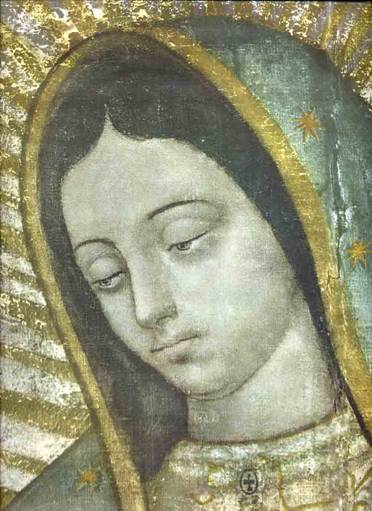
Our Lady of Guadalupe
Pillar of Scourging of Our Lord JESUS

Shroud of Turin


 Posts
Posts

